

ICSE Solutions Goyal Brothers Class 7 History Civics Chapter 11 The Constitution Of India have been provided below and is also available in Pdf for free download. The Goyal Brothers ICSE solutions for Class 7 History Civics have been prepared as per the latest syllabus and ICSE books and examination pattern suggested in Class 7. Questions given in ICSE Goyal Brothers book for Class 7 History Civics are an important part of exams for Class 7 History Civics and if answered properly can help you to get higher marks. Refer to more Chapter-wise answers for ICSE Class 7 History Civics and also download more latest study material for all subjects. Chapter 11 The Constitution Of India is an important topic in Class 7, please refer to answers provided below to help you score better in exams
Goyal Brothers Chapter 11 The Constitution Of India Class 7 History Civics ICSE Solutions
Class 7 History Civics students should refer to the following ICSE questions with answers for Chapter 11 The Constitution Of India in Class 7. These ICSE Solutions with answers for Class 7 History Civics will come in exams and help you to score good marks
Chapter 11 The Constitution Of India Goyal Brothers ICSE Solutions Class 7 History Civics
The Constitution of India
Important Words
- The Constitution: A body of rules and regulations which defines the organization, powers, and functions of the government as well as the rights and duties of the citizens.
- Sovereign: An independent country which is not subject to any outside authority. No external power can control or interfere in the internal affairs of the country or dictate its foreign policies.
- Amendment: Any change in the Constitution of India.
- Socialism: Fair distribution of the country’s wealth among all and providing equal opportunities to all, to bridge the gap between the rich and the poor.
- Secular state: A state which does not adopt a state religion and does not discriminate against anybody on the basis of religion.
- Democracy: A government of the people, for the people and by the people.
A. Fill in the blanks:
1. Dr. B.R. Ambedkar was the chairman of Drafting committee of the constitution.
2. Dr. Rajendra Prasad was the chairman of the Constituent Assembly.
3. The Constituent Assembly took about 2 years 11 months and 18 days to complete its work.
4. The Preamble is an introduction to the Constitution.
5. The constitution came into force in the year 1950.
B. Match the contents of Column A with those of Column B
| Column A | Column B (Correct Match) |
|---|---|
| 1. Pt Jawaharlal Nehru | (b) First Prime Minister of India |
| 2. B. R. Ambedkar | (a) Chairman of the Drafting Committee. |
| 3. Frank Anthony | (d) Representative of the Anglo-Indian community. |
| 4. Dr H. P. Modi | (c) Representative of the Parsees. |
| 5. A state where the head of the state is an elected person. | (i) Republic |
| 6. A state where the government is run by the elected members of the people. | (h) Democratic |
| 7. A state which is independent of external interference. | (e) Sovereign |
| 8. A state where there is no discrimination against any religion. | (g) Secular |
| 9. A state which lays emphasis on economic and social equality. | (f) Socialist |
III. Tick mark (✓) the cor (X) the wrong ones.
1. Constitutiion is the supreme law of the land.
Answer: ✓ (True)
2. Before independence, our country was governed according to our Constitution.
Answer: X (False)
3. Our country became a Sovereign Democractic Republic on 15 th August, 1947.
Answer: X (False)
4. In India, the son or daughter of the President succeeds him after his death.
Answer: X (False)
5. In India, all religions are equally respected.
Answer: ✓ (True)
6. Elections to the Parliament and state legislatures are held every five years.
Answer: ✓ (True)
Answer the following:
Question 1. What do you mean by the term ‘Constitution’? What does it contains?
Answer: A Constitution is a foundational legal document that outlines the fundamental rules, principles, and procedures for governing a country. It serves as the supreme framework within which the state machinery must operate, clearly defining the powers and responsibilities of the different branches of government - executive, legislative, and judicial - while detailing the basic rights and duties of its citizens.
In simple words: The Constitution is a legal book of rules that explains how our country must be governed. It sets up the powers of the government and lists the rights and duties of every citizen.
Exam Tip: Define the Constitution as the supreme legal framework of a nation, and list its three main elements: rules of governance, division of state powers, and citizen rights.
Question 2. Why is it necessary to have a Constitution for a country?
Answer: A Constitution is essential for a nation because it articulates its core values and national aspirations, including democracy, socialism, secularism, individual liberty, equality, and fraternity. By establishing these pillars, it guides the state's policies and protects public welfare, making it a sacred document that commands our utmost respect.
In simple words: A country needs a Constitution because it sets out our most important goals, like democracy, equality, and freedom, ensuring everyone is treated fairly under the law.
Exam Tip: Focus on how the Constitution defines and protects core national values like secularism, democracy, and equality.
Question 3. Name the body that framed the Constitution of India. Who was its chairman?
Answer: The Constitution of India was drafted and framed by a specialized representative body known as the Constituent Assembly. The distinguished statesman Dr. Rajendra Prasad served as the permanent President of this Assembly.
In simple words: Our Constitution was created by a group of leaders called the Constituent Assembly, and Dr. Rajendra Prasad was their leader.
Exam Tip: Identify the 'Constituent Assembly' as the drafting body, and name 'Dr. Rajendra Prasad' as its President.
Question 4. Who represented the Anglo-Indians and the Parsees in the Constituent Assembly?
Answer: In the Constituent Assembly, Frank Anthony served as the representative for the Anglo-Indian community, while Dr. H.P. Modi represented the interests of the Parsee community.
In simple words: Frank Anthony represented the Anglo-Indians, and Dr. H.P. Modi represented the Parsees in the assembly.
Exam Tip: Match Frank Anthony with Anglo-Indians and Dr. H.P. Modi with the Parsee community to write a complete answer.
Question 5. What is Preamble? Why is it important?
Answer: The Preamble serves as the introductory statement to the Constitution, outlining its core values, objectives, and vision. It is highly significant because it summarizes the fundamental aims, principles, and philosophy of the state in a few concise words, indicating the democratic nature of our republic and declaring the people of India as the ultimate source of constitutional authority.
In simple words: The Preamble is the introduction to our Constitution. It is important because it briefly explains the main goals, values, and ideals of our country, showing that all power comes from the people.
Exam Tip: Define the Preamble as the introductory preface, and state that it outlines the core philosophy and objectives of the state.
Question 6. What are the main ideals contained in the Preamble to the Constitution of India?
Answer: The Preamble outlines the defining ideals and goals of the Indian Republic:
1. Sovereign: India is an independent nation, completely free from any external control or interference.
2. Socialist: The state aims to achieve economic and social equality, ensuring a fair distribution of national wealth.
3. Secular: The state has no official religion and treats all faiths with equal respect.
4. Democratic: The government is elected by the people, answerable to them, and governed by representatives.
5. Republic: The head of state is an elected representative rather than a hereditary monarch.
6. Justice: Seeking to secure social, economic, and political justice for all citizens.
7. Liberty: Guaranteeing freedom of thought, expression, belief, faith, and worship.
8. Equality: Ensuring equal status and opportunities for all, without bias.
9. Fraternity: Promoting a spirit of brotherhood to protect individual dignity and preserve national unity.
In simple words: The main ideals are that India is an independent, fair, religiously neutral, elected, and people-led nation. It promises to give every citizen justice, liberty, equality, and a spirit of brotherhood.
Exam Tip: Name and briefly define the five core ideals and the four main objectives of the Preamble.
Question 7. Define the following: (a) Sovereign State (b) Secular State (c) A Republic
Answer: (a) Sovereign State: This means that the nation is completely independent, free from any foreign control, and holds absolute authority to manage its internal and external affairs without outside interference.
(b) Secular State: This implies that the state has no official or state religion. It maintains strict neutrality, treats all religious communities equally, and does not discriminate based on faith.
(c) A Republic: This represents a system of government where the head of state is an elected official rather than a hereditary monarch, chosen by the people for a set term of office.
In simple words: A Sovereign State is completely independent of foreign control. A Secular State has no official religion and treats all faiths equally. A Republic is a country where the leader is elected by the citizens instead of inheriting power.
Exam Tip: Define 'Sovereign' as absolute independence, 'Secular' as state neutrality toward all religions, and 'Republic' as having an elected head of state.
Question 8. State the difference between a democracy and a republic.
Answer: Although closely related, these two terms describe different political concepts:
- Democracy: Refers to a system of self-governance where political authority is held by the people. It is famously defined as a "government of the people, by the people, and for the people", where citizens elect their representatives through voting.
- Republic: Refers to a constitutional structure where the head of state is an elected representative rather than a hereditary monarch, chosen by the citizens for a set term of office.
In simple words: A democracy is a system of government where the people vote to elect their representatives. A republic is a country where the head of state is elected for a set term, rather than inheriting power through royalty.
Exam Tip: Explain that while democracy refers to how the government is elected by the people, a republic refers specifically to having an elected head of state instead of a hereditary monarch.
Question 9. Do you think Indian government is ‘of the people, by the people and for the people’?
Answer: The Indian system of governance operates as a true democracy. This statement is accurate because Indian citizens hold the ultimate political authority, choosing their government through free and fair general elections held every five years, ensuring that the administration is directly answerable to the people.
In simple words: Yes, because India is a democracy where citizens vote in general elections every five years to choose their own government, making the leaders answerable to the public.
Exam Tip: Support your answer by pointing to India's system of universal adult franchise and the holding of regular, free general elections every five years.
Additional Questions
EXERCISES
A. Fill in the blanks:
1. The Constitution of India was framed by the constituent Assembly.
2. The Preambles tells us about the source of the Constitution, the nature of the state and its main objectives of the Constitution.
3. Socialism involves fair distribution of the country’s wealth among all sections of the people.
4. The people of India elect their own government because India is a Democratic country.
5. The President of India has a fixed term of 5 years.
B. Match the following:
| Column A | Column B (Correct Match) |
|---|---|
| 1. 1946 | (c) The first meeting of the Constituent Assembly was held. |
| 2. 1947 | (a) India became independent. |
| 3. 1949 | (b) The Constitution of India was passed. |
| 4. 1950 | (e) India became a sovereign, democratic, Republic. |
| 5. 1976 | (d) The Constitution of India was amended. |
C. Choose the correct answer:
Question 1. India won freedom from whose rule on 15 August 1947?
(a) British rule
(b) French rule
(c) Portuguese rule
(d) None of the options
Answer: (a) British rule
In simple words: After a long national struggle, India won its independence from British colonial rule on August 15, 1947.
Exam Tip: Keep August 15, 1947, in mind as the landmark date India became independent from British rule.
Question 2. The chairman of the Constituent Assembly of India was:
(a) Dr Rajendra Prasad
(b) B. R. Ambedkar
(c) Maulana Azad
(d) None of the options
Answer: (a) Dr Rajendra Prasad
In simple words: Dr. Rajendra Prasad was the permanent President of the Constituent Assembly, which drafted the Constitution.
Exam Tip: Distinguish between Dr. Rajendra Prasad and Dr. B.R. Ambedkar.
Question 3. The source of the Indian Constitution is:
(a) the President
(b) the Prime Minister
(c) the people of India
(d) None of the options
Answer: (c) the people of India
In simple words: The Constitution begins with "We, the People of India", showing that the ultimate power and authority of our laws come from the citizens themselves.
Exam Tip: The Preamble declares that all constitutional power originates directly from the citizens of India.
Question 4. Which type of state does not have an official religion?
(a) a democratic state
(b) a socialist state
(c) a secular state
(d) None of the options
Answer: (c) a secular state
In simple words: A secular state treats all religions equally and does not adopt any official state religion.
Exam Tip: Secularism means the state maintains strict neutrality toward all religious communities and has no official religion.
Question 5. A democracy can work only if there is a spirit of what among the different sections of society?
(a) jealousy
(b) brotherhood
(c) competition
(d) None of the options
Answer: (b) brotherhood
In simple words: For democracy to succeed, all communities and groups must share a spirit of brotherhood and national unity.
Exam Tip: A spirit of mutual respect and brotherhood is essential for the smooth functioning of a democratic society.
D. State whether the following are true or false:
1. The Constitution of India was framed by the British government.
Answer: False (Correct statement: The Constitution of India was framed by the Constituent Assembly.)
2. Sarojini Naidu was a member of the Constituent Assembly.
Answer: True
3. The Preamble is the conclusion to the Constitution.
Answer: False (Correct statement: The Preamble is the introduction to the Constitution.)
4. When the President of India dies, his/her son becomes the next President.
Answer: False
5. All Indian citizens are equal in the eyes of the law.
Answer: True
E. Answer the following questions in one or two words/ sentences:
Question 1. Define the term ‘constitution’.
Answer: A Constitution is a formal document outlining the primary laws of a country. It clearly establishes the structure, powers, and duties of the government, while detailing the basic rights and responsibilities of its citizens.
In simple words: A Constitution is the basic book of laws of a country that explains how the government works and lists the rights of every citizen.
Exam Tip: Define it as the fundamental law of a nation that defines state powers and protects citizen rights.
Question 2. How do we know that the Constitution of India was not imposed on us by the British?
Answer: Our Constitution was not dictated by the British. Following independence in 1947, a dedicated body of Indian representatives - the Constituent Assembly, led by Dr. Rajendra Prasad - was appointed to draft and write our own laws.
In simple words: We know it was not imposed by the British because, after getting freedom, our own leaders in the Constituent Assembly sat down and wrote it.
Exam Tip: Highlight that it was drafted by the sovereign 'Constituent Assembly' of Indian representatives under Dr. Rajendra Prasad.
Question 3. When did the Constitution of India come into force?
Answer: The Constitution of India officially became active and came into force on January 26, 1950.
In simple words: The Constitution of India became active on January 26, 1950.
Exam Tip: State the complete date - January 26, 1950 - to write a complete, high-scoring answer.
Question 4. What is a preamble.
Answer: The Preamble serves as the introductory preface to the Constitution. Although not an enforceable law itself, it is highly important because it outlines the core values, philosophy, and true spirit of the Indian Constitution.
In simple words: The Preamble is the introduction to our Constitution. It is not a law, but it explains the core values and spirit of our country's laws.
Exam Tip: Describe the Preamble as the introductory preface that outlines the fundamental spirit of the Constitution.
Question 5. Who gives the government of India the authority to govern the country?
Answer: The ultimate authority to administer and govern the nation is granted to the Government of India by the Constitution of India, which derives its power from the people.
In simple words: The government gets its authority to rule the country from the Constitution, which represents the will of the people.
Exam Tip: State clearly that the Constitution of India is the supreme source of authority for the government.
F. Answer the following questions briefly:
Question 1. Explain the meaning of the following terms: (a) Sovereign (b) Democratic (c) Republic
Answer: The definitions of these fundamental constitutional terms are:
(a) Sovereign: This means that India is a completely independent nation, free from any foreign control, holding absolute authority to manage its own domestic and foreign policies.
(b) Democratic: This represents a system of government that derives its power from the citizens, famously described as being 'of the people, by the people, and for the people.'
(c) Republic: This refers to a state where the highest office - the head of state - is occupied by an elected representative chosen by the citizens for a set term, rather than a hereditary monarch.
In simple words: Sovereign means the country is fully independent and free from outside control. Democratic means the government is elected by the people, for the people. Republic means the leader is elected by the citizens instead of inheriting power.
Exam Tip: Write separate headings for (a), (b), and (c), and define each term using precise political vocabulary like 'elected head of state' and 'independent nation'.
Question 2. State the basic features of the following: (a) a socialist state (b) a secular state|
Answer: The core features of these two constitutional values are:
(a) Socialist State: A socialist state strives to achieve economic and social equality by ensuring a fair distribution of national wealth among all sections of society, providing equal opportunities to bridge the gap between the rich and the poor.
(b) Secular State: A secular state is characterized by several key features:
1. It does not adopt or maintain any official state religion.
2. It does not practice discrimination against any citizen based on their faith.
3. It remains neutral, neither favoring nor promoting any specific religion.
4. It guarantees complete freedom of conscience, allowing every individual to openly profess, practice, and propagate their chosen faith.
In simple words: A socialist state works to distribute wealth fairly and give everyone equal opportunities. A secular state has no official religion, treats all faiths equally, and guarantees every person the freedom to practice their own religion.
Exam Tip: For a socialist state, focus on 'wealth distribution' and 'equal opportunities'. For a secular state, list the four pillars of religious neutrality and freedom of worship.
Question 3. State the objectives of the Constitution with reference to: (a) Justice (b) Liberty (c) Equality
Answer: The Constitution aims to achieve these core objectives for all citizens:
(a) Justice: The state ensures that all individuals are treated equally under the law. Justice is guaranteed to all, meaning no citizen can be denied their rights based on religion, caste, gender, race, or place of birth, ensuring everyone receives their fair due.
(b) Liberty: Every citizen is guaranteed fundamental freedoms, including the right to think, express their opinions openly, and practice the religion of their choice without state interference.
(c) Equality: All citizens are equal before the law and receive equal protection from the state. The government is forbidden from practicing discrimination based on wealth, caste, gender, or religion, ensuring equal status and opportunities for all.
In simple words: Justice means everyone is treated fairly and equally under the law, regardless of their caste or religion. Liberty means citizens are free to think, speak, and follow their own religion. Equality means the law treats everyone the same and protects all citizens equally.
Exam Tip: Use the three sub-headings to explain these goals, connecting them to fundamental constitutional guarantees.
Question 4. Why did the farmers of the Constitution decide to promote fraternity among the people of India?
Answer: The framers of the Constitution emphasized fraternity for several key reasons:
1. Essential for Democracy: A democratic society can only survive and function if its diverse communities share a spirit of mutual brotherhood and national unity.
2. Eradication of Social Evils: Promoting a sense of being 'one people' is crucial to eliminate social evils such as communalism and the practice of untouchability.
3. National Progress: Fostering harmony allows the nation to stay united, helping it progress smoothly toward securing justice, liberty, and equality for all citizens.
In simple words: The makers of the Constitution wanted to promote fraternity because a democracy can only succeed if people live in harmony. A strong spirit of unity is needed to end social evils like communalism and untouchability, helping the country progress together.
Exam Tip: Explain that fraternity is necessary to combat social divisions like communalism and is essential for the success of a democratic society.
G Picture study:
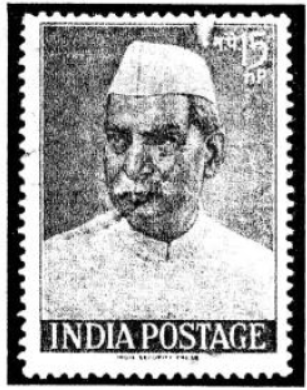
Question 1. Identify the person in the picture.
Answer: The photograph depicts Dr. Rajendra Prasad, a prominent national leader and statesman.
In simple words: The person in the picture is Dr. Rajendra Prasad.
Exam Tip: Identify the figure as Dr. Rajendra Prasad, who served as the first President of India.
Question 2. Name two other prominent members of the Constituent Assembly.
Answer: Two other highly prominent members of the Constituent Assembly were Dr. B.R. Ambedkar and Maulana Abul Kalam Azad.
In simple words: Two other famous members of the assembly were Dr. B.R. Ambedkar and Maulana Azad.
Exam Tip: Dr. B.R. Ambedkar and Maulana Abul Kalam Azad are two excellent examples to list.
Question 3. When was the first meeting of the Constituent Assembly held?
Answer: The historic first sitting of the Constituent Assembly took place on December 9, 1946.
In simple words: The assembly held its first meeting on December 9, 1946.
Exam Tip: Write the exact date - December 9, 1946 - for full marks.
Question 4. When did the Constitution come into force?
Answer: The Constitution of India officially became active and came into force on January 26, 1950.
In simple words: The Constitution of India came into force on January 26, 1950.
Exam Tip: State the complete date and note that this day is celebrated as Republic Day.
Question 5. What is the introduction to the Constitution called? What does it tell us about the source of the Constitution?
Answer: The introductory preface to the Constitution is known as the Preamble. It is highly significant as it reflects the vision, values, and aspirations of the framers of the Constitution. The Preamble clearly states that the ultimate source of authority for the Constitution lies with 'the people of India', while defining the democratic nature of the state and its primary objectives.
In simple words: The introduction is called the Preamble. It explains the goals and vision of the makers of our Constitution, showing that all authority comes from the people of India.
Exam Tip: Identify the preface as the 'Preamble', and state that it names 'the people of India' as the ultimate source of the Constitution.
Question 6. Mention the objectives stated in the introduction.
Answer: The primary objectives outlined in the Preamble are:
1. Justice: Ensuring that all citizens are treated equally under the law without any discrimination, securing social, economic, and political justice for all.
2. Liberty: Guaranteeing fundamental freedoms, including freedom of thought, expression, belief, faith, and worship.
3. Equality: Guaranteeing equal status and opportunities under the law for all citizens, while banning discrimination.
4. Fraternity: Fostering a strong spirit of brotherhood and national unity, which is essential for a democracy to function smoothly.
In simple words: The four main objectives are Justice, Liberty, Equality, and Fraternity.
Exam Tip: List all four objectives - Justice, Liberty, Equality, and Fraternity - with a brief explanation for each.
Free study material for History Civics
ICSE Goyal Brothers Solutions Class 7 History Civics Chapter 11 The Constitution Of India
Students can now access the detailed Goyal Brothers Solutions for Chapter 11 The Constitution Of India on our portal. These solutions have been carefully prepared as per latest ICSE Class 7 syllabus. Each solution given above has been updated based on the current year pattern to ensure Class 7 students have the most updated History Civics content.
Master Goyal Brothers Textbook Questions
Our subject experts have provided detailed explanations for all the questions found in the Goyal Brothers textbook for Class 7 History Civics. We have focussed on making the concepts easy for you in Chapter 11 The Constitution Of India so that students can understand the concepts behind every answer. For all numerical problems and theoretical concepts these solutions will help in strengthening your analytical skill required for the ICSE examinations.
Complete History Civics Exam Preparation
By using these Goyal Brothers Class 7 solutions, you can enhance your learning and identify areas that need more attention. We recommend solving the History Civics Questions from the textbook first and then use our teacher-verified answers. For a proper revision of Chapter 11 The Constitution Of India, students should also also check our Revision Notes and Sample Papers available on studiestoday.com.
FAQs
You can download the verified Goyal Brothers solutions for Chapter 11 The Constitution Of India on StudiesToday.com. Our teachers have prepared answers for Class 7 History Civics as per 2026-27 ICSE academic session.
Yes, our solutions for Chapter 11 The Constitution Of India are designed as per new 2026 ICSE standards. 40% competency-based questions required for Class 7, are included to help students understand application-based logic behind every History Civics answer.
Yes, every exercise in Chapter 11 The Constitution Of India from the Goyal Brothers textbook has been solved step-by-step. Class 7 students will learn History Civics conceots before their ICSE exams.
Yes, follow structured format of these Goyal Brothers solutions for Chapter 11 The Constitution Of India to get full 20% internal assessment marks and use Class 7 History Civics projects and viva preparation as per ICSE 2026 guidelines.