

ICSE Solutions Voyage Class 7 Geography Chapter 10 Major Industries have been provided below and is also available in Pdf for free download. The Voyage ICSE solutions for Class 7 Geography have been prepared as per the latest syllabus and ICSE books and examination pattern suggested in Class 7. Questions given in ICSE Voyage book for Class 7 Geography are an important part of exams for Class 7 Geography and if answered properly can help you to get higher marks. Refer to more Chapter-wise answers for ICSE Class 7 Geography and also download more latest study material for all subjects. Chapter 10 Major Industries is an important topic in Class 7, please refer to answers provided below to help you score better in exams
Voyage Chapter 10 Major Industries Class 7 Geography ICSE Solutions
Class 7 Geography students should refer to the following ICSE questions with answers for Chapter 10 Major Industries in Class 7. These ICSE Solutions with answers for Class 7 Geography will come in exams and help you to score good marks
Chapter 10 Major Industries Voyage ICSE Solutions Class 7 Geography
Question. Why do you think industries do not always employ adequate and right methods to control industrial pollution?
Answer: Industries do not always use proper ways to stop pollution because these methods cost too much money. Factory owners feel it is too hard on their wallets. Also, many owners do not have school education. They do not know how or why they should stop pollution.
In simple words: Factories often do not stop pollution because the cleaning equipment is too expensive and some owners do not understand the harm.
Exam Tip: Focus on two major reasons in your answer: the high cost of pollution control technologies and the lack of awareness among industrialists.
Values and Life Skills
Industries cause pollution when the factories that manufacture goods dump their wastes into water, air and soil.
Question. Imagine that you are a factory owner. Write down a few ways in which you can reduce the pollution caused by your factory.
Answer: I would take these steps:
1. I would put a tall chimney pipe to help clean up the smoke before it goes into the air.
2. Dirty water from the factory must be cleaned in a treatment plant first. It should not go straight into city water drains.
3. Hard waste from the factory must be thrown away safely. We should only dump it in special safe areas.
4. The chimney should be built based on science rules. This helps keep smoke levels low and safe.
5. We must look after all machines. Fixing them often helps stop extra smoke and pollution.
In simple words: To stop pollution, factory owners should clean dirty water, filter smoke from chimneys, dispose of solid waste safely, and keep machines well-maintained.
Exam Tip: Structure your answer with clear bullet points addressing air, water, and solid waste pollution control measures.
Exercises
A. Fill in the blanks.
Question 1. __________ is necessary material for making machines.
Answer: Steel
In simple words: Steel is the main metal used to build all kinds of machines.
Exam Tip: Remember that steel is considered the backbone of modern industry because it is used to make machinery.
Question 2. Jamshedpur and __________ are important steel producing centres in India.
Answer: Rourkela
In simple words: Jamshedpur and Rourkela are two of the biggest steel-making cities in India.
Exam Tip: Memorize major steel plants in India like Jamshedpur, Rourkela, Bhilai, and Durgapur for map and fill-in-the-blank questions.
Question 3. Southern USA is an important __________ producing belt in the US.
Answer: cotton
In simple words: The southern part of America grows a very large amount of cotton.
Exam Tip: The warm climate and fertile soil of the Southern United States make it a prime region for cotton farming.
Question 4. Bengaluru is a major centre of __________ industry in India.
Answer: information technology
In simple words: Bengaluru is India's main city for computer and software businesses.
Exam Tip: Bengaluru is widely known as the Silicon Valley of India due to its concentration of IT companies.
Question 5. __________ is the world’s largest shipbuilding country.
Answer: China
In simple words: China builds more ocean ships than any other nation.
Exam Tip: China currently leads the global shipbuilding market, followed by Japan and South Korea.
B. Match the following.
Question. Match the items in Column A with their correct matches in Column B:
| Column A | Column B |
|---|---|
| 1. Steel | (i) Southern USA |
| 2. Cotton | (ii) Sugar |
| 3. Bengaluru | (iii) Bokaro |
| 4. Brazil | (iv) Fish |
| 5. Omega-3 | (v) IT |
Answer:
| Column A | Column B |
|---|---|
| 1. Steel | (iii) Bokaro |
| 2. Cotton | (i) Southern USA |
| 3. Bengaluru | (v) IT |
| 4. Brazil | (ii) Sugar |
| 5. Omega-3 | (iv) Fish |
In simple words: This table matches key resources, industries, and products with their respective locations or sources.Exam Tip: Be sure to pair industries with their respective hubs, such as Bokaro for steel and Silicon Valley/Bengaluru for IT.
C. State whether the following is true or false.
Question 1. Other industries depend on the steel industry for infrastructural material.
Answer: True.
In simple words: Most factories need steel to build their structures and machines.
Exam Tip: Steel is fundamental to all construction and manufacturing, making this statement absolutely true.
Question 2. Steel industry is set up in areas where raw materials are available.
Answer: True.
In simple words: Steel factories are built close to where coal and iron are mined because these items are very heavy to carry far away.
Exam Tip: The location of weight-losing industries like steel is heavily determined by proximity to heavy raw materials.
Question 3. The Deccan Plateau is a major cotton producing region.
Answer: True.
In simple words: The Deccan Plateau has dark soil that is perfect for growing cotton.
Exam Tip: The black soil (regur soil) of the Deccan traps moisture, which is highly beneficial for growing cotton.
Question 4. Ethanol can be produced from cotton.
Answer: False. Ethanol is made from sugarcane, not cotton.
In simple words: We get ethanol from sweet plants like sugarcane, not from cotton.
Exam Tip: Ethanol is a biofuel manufactured primarily from sugarcane, corn, and sugar beet, rather than fiber crops like cotton.
Question 5. Practising the principle of 3 Rs can help in controlling pollution.
Answer: True.
In simple words: Using the 3 Rs - reduce, reuse, and recycle - helps us make less trash and keeps our Earth clean.
Exam Tip: Practicing the 3 Rs (Reduce, Reuse, Recycle) is a key strategy for sustainable waste management.
D. Answer the following questions in brief.
Question 1. Why is the steel industry considered the basic industry on which other industries depend?
Answer: Steel is a key material used to build machines and factory buildings. Almost all other factories rely on steel. This is why the steel industry is called the foundation of other industries.
To make steel, we need heavy items like iron ore, limestone, coal, and manganese. Because these materials weigh so much, steel factories are usually set up close to the mines where these resources are found.
In simple words: Other factories need steel to make their own machines. Since the materials to make steel are very heavy, steel factories are built near the mines.
Exam Tip: Always define why steel is a 'basic' industry by mentioning that it provides raw materials for other manufacturing units. Remember to list the key raw materials like iron ore and coal.
Question 2. Why are cotton textile centres located in the Deccan Plateau?
Answer: Cotton mills are located in the Deccan Plateau for these reasons:
1. The area has rich black soil that is excellent for growing healthy cotton plants.
2. There is a large number of workers available who work for low wages.
In simple words: The Deccan Plateau has black soil that is great for cotton. It also has many people who can work in the mills.
Exam Tip: Highlight black soil (regur soil) and the availability of affordable labour as the two primary reasons for cotton industry localization in this region.
Question 3. Name the factors that have made Bengaluru a major IT centre.
Answer: Bengaluru became a top tech hub due to its nice weather, great transport links, skilled workers, and helpful government rules.
In simple words: Bengaluru has lovely weather and many smart computer workers. The government also made helpful rules for tech companies.
Exam Tip: Be sure to mention the pleasant climate, skilled workforce, and supportive government policies as key growth drivers.
Question 4. Which are the major automobile-producing countries in the world?
Answer: The five leading countries for making cars are China, the United States, Japan, Germany, and South Korea.
In simple words: Most of the world's cars are made in China, America, Japan, Germany, and South Korea.
Exam Tip: List all five countries clearly: China, USA, Japan, Germany, and South Korea, to ensure you secure full marks.
Question 5. What are the major causes of industrial pollution?
Answer: The main reasons for factory pollution are:
(a) Harmful chemicals that factories use to make goods.
(b) Everyday items we buy, like paint, spray cans, plastic, cement, and electronic parts.
(c) Many chemical liquids used to make leather, paint, medicines, and medical waste.
(d) Gases released into the air, such as carbon monoxide.
(e) Heavy work like mining, chopping down trees, and building big dams or roads.
In simple words: Factories cause pollution by using bad chemicals, throwing away toxic waste, and letting out dirty gases into the air.
Exam Tip: Group your points into water, air, and land causes. Use specific examples like chemical waste, greenhouse gases, and deforestation to write a strong answer.
E. Answer the following questions in one or two paragraphs.
Question 1. Give an account of the cotton textile industry in India.
Answer: The cotton cloth industry is one of the most important businesses in India. Over 40 percent of working people in India rely on this business to earn a living.
Making cotton cloth involves these steps:
1. Cleaning the raw cotton fibres.
2. Combing the fibres to make soft rope-like shapes called 'slivers'.
3. Spinning the slivers to make thread.
4. Weaving the thread into plain, uncoloured cloth.
5. Bleaching the plain cloth to make it white.
6. Adding colours and designs to the cloth.
In simple words: Many people in India work in the cotton business. The process goes from cleaning the raw cotton to spinning, weaving, and colouring it.
Exam Tip: Remember the 40% statistic as it shows the scale of the industry. Memorize all six steps of production in the correct sequential order.
Question 2. Write a note on sugar producing countries.
Answer: In the year 2015, the five biggest sugarcane-growing nations were Brazil, India, China, Thailand, and Pakistan. In Brazil, most sugarcane is grown in the south-central area. In India, key states for growing sugarcane are Uttar Pradesh, Maharashtra, and Karnataka.
In simple words: Brazil and India are among the biggest sugar makers. In India, states like Uttar Pradesh and Maharashtra grow the most sugarcane.
Exam Tip: Name the global leaders (Brazil and India) and specify the three key sugarcane-producing Indian states (UP, Maharashtra, and Karnataka).
Question 3. What do you know about the ship-building industry in the world ?
Answer: Making ships is one of the oldest businesses in the world. China builds the most ships, with Japan and South Korea close behind. In China, many shipyards are located near Beijing, which is a major shipbuilding hub.
In simple words: Building ships is an ancient business. Today, China, Japan, and South Korea build the most ships.
Exam Tip: Mention that shipbuilding is an ancient industry and list China, Japan, and South Korea as the leading modern builders.
Question F. Trace your journey: Imagine you are a cotton boll. Write about your journey from the field to somebody’s wardrobe write about all the stages you had to pass through to become a garment.
Answer: Here are the steps a cotton boll goes through to become a piece of clothing:
1. Cleaning the raw cotton strands.
2. Combing the cotton to make soft ropes.
3. Spinning the cotton ropes into long thread.
4. Weaving the thread to make plain cloth.
5. Bleaching the cloth to clean out raw colours.
6. Coloring and stamping designs onto the cloth.
In simple words: A cotton boll is cleaned, combed, spun into thread, woven into cloth, and then colored to make clothes.
Exam Tip: Even though the question is creative, the examiners look for the same six steps of textile processing in the correct order.
G. Map work.
Question 1. On an outline map of the world mark any five major industrial centres of the world.
Answer: Five important industrial cities across the globe are:
1. Sydney
2. Chicago
3. Berlin
4. London
5. St. Petersburg
In simple words: We can mark major industrial cities like Chicago, London, Berlin, St. Petersburg, and Sydney on the world map.
Exam Tip: Practice locating these five cities on a physical world map so you can mark them accurately during exams.
Question 2. Mark two major centres of IT industries.
Answer: The two major IT hubs are Bengaluru and Silicon Valley.
In simple words: Bengaluru in India and Silicon Valley in the USA are two famous computer technology areas.
Exam Tip: Be ready to mark Bengaluru in India and Silicon Valley on the west coast of the USA.
Question 3. Mark two major centres of steel production.
Answer: Two major areas for making steel are Singhbhum and Raniganj.
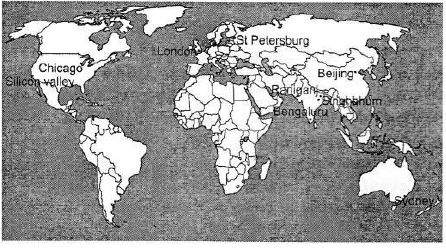
In simple words: Singhbhum and Raniganj are two big steel areas in India.
Exam Tip: Both these steel-producing areas are located in the eastern region of India.
H. Picture Study
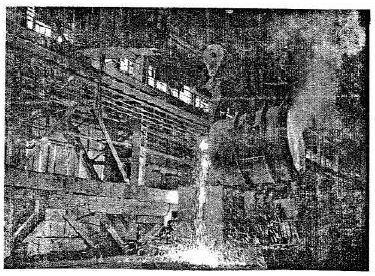
Question 1. This picture shows an industry that cannot be set up in all areas. Why ?
Answer: This is a steel factory. It cannot be built everywhere because it needs heavy raw materials and low-cost workers close by, which are hard to find in every region.
In simple words: This is a steel factory. It must be built near its raw materials and cheap workers.
Exam Tip: Identify the picture as a steel plant and explain that it depends heavily on raw materials and affordable labor.
Question 2. Name the raw materials used in this industry.
Answer: The main materials used are coal, limestone, iron ore, and manganese.
In simple words: To make steel, we need iron ore, coal, limestone, and manganese.
Exam Tip: Always list all four crucial raw materials: iron ore, coal, limestone, and manganese.
Let’s Do Something
Question. Take some time out to visit a handicrafts shop nearby. Make a note of the following there :
1. What are the items sold in the shop ?
2. How are these products manufactured ?
3. Where have they come from ?
Answer: This is a practical activity. You can visit a nearby handicraft shop and write down details about the goods sold there, how they are crafted, and where they were brought from.
In simple words: Go to a local craft shop to see handmade items and learn where they were made.
Exam Tip: This is an activity-based task to help you understand local cottage and small-scale industries.
Free study material for Geography
ICSE Voyage Solutions Class 7 Geography Chapter 10 Major Industries
Students can now access the detailed Voyage Solutions for Chapter 10 Major Industries on our portal. These solutions have been carefully prepared as per latest ICSE Class 7 syllabus. Each solution given above has been updated based on the current year pattern to ensure Class 7 students have the most updated Geography content.
Master Voyage Textbook Questions
Our subject experts have provided detailed explanations for all the questions found in the Voyage textbook for Class 7 Geography. We have focussed on making the concepts easy for you in Chapter 10 Major Industries so that students can understand the concepts behind every answer. For all numerical problems and theoretical concepts these solutions will help in strengthening your analytical skill required for the ICSE examinations.
Complete Geography Exam Preparation
By using these Voyage Class 7 solutions, you can enhance your learning and identify areas that need more attention. We recommend solving the Geography Questions from the textbook first and then use our teacher-verified answers. For a proper revision of Chapter 10 Major Industries, students should also also check our Revision Notes and Sample Papers available on studiestoday.com.
FAQs
You can download the verified Voyage solutions for Chapter 10 Major Industries on StudiesToday.com. Our teachers have prepared answers for Class 7 Geography as per 2026-27 ICSE academic session.
Yes, our solutions for Chapter 10 Major Industries are designed as per new 2026 ICSE standards. 40% competency-based questions required for Class 7, are included to help students understand application-based logic behind every Geography answer.
Yes, every exercise in Chapter 10 Major Industries from the Voyage textbook has been solved step-by-step. Class 7 students will learn Geography conceots before their ICSE exams.
Yes, follow structured format of these Voyage solutions for Chapter 10 Major Industries to get full 20% internal assessment marks and use Class 7 Geography projects and viva preparation as per ICSE 2026 guidelines.