

ICSE Solutions Selina Concise Class 7 History Civics Chapter 1 The Constitution of India have been provided below and is also available in Pdf for free download. The Selina Concise ICSE solutions for Class 7 History Civics have been prepared as per the latest syllabus and ICSE books and examination pattern suggested in Class 7. Questions given in ICSE Selina Concise book for Class 7 History Civics are an important part of exams for Class 7 History Civics and if answered properly can help you to get higher marks. Refer to more Chapter-wise answers for ICSE Class 7 History Civics and also download more latest study material for all subjects. Chapter 1 The Constitution of India is an important topic in Class 7, please refer to answers provided below to help you score better in exams
Selina Concise Chapter 1 The Constitution of India Class 7 History Civics ICSE Solutions
Class 7 History Civics students should refer to the following ICSE questions with answers for Chapter 1 The Constitution of India in Class 7. These ICSE Solutions with answers for Class 7 History Civics will come in exams and help you to score good marks
Chapter 1 The Constitution of India Selina Concise ICSE Solutions Class 7 History Civics
Important Words
- Constitution: This is a set of guidelines and laws defining how a government functions, its authority, and the basic rights and duties of its people.
- Sovereign: A term meaning a completely free country that does not answer to any outside power. No foreign nation can control its internal decisions or direct its policies.
- Amendment: Any formal revision or update made to the Indian Constitution.
- Socialism: The fair sharing of a nation's wealth among all citizens to bridge the gap between rich and poor by offering equal chances to everyone.
- Secular State: A nation that has no official state religion and does not treat anyone differently because of their personal faith.
- Democracy: A style of governance that is run by the public, designed to help the public, and created by the public.
Time To Learn
A. Fill in the blanks:
Question 1. Dr. B.R. Ambedkar was the chairman of _________ committee of the constitution.
Answer: Drafting
In simple words: Dr. B.R. Ambedkar led the group that wrote down the main draft of India's book of rules.
Exam Tip: Remember that Dr. Ambedkar is known as the father of the Indian Constitution because of his role in heading this specific committee.
Question 2. Dr. Rajendra Prasad was the chairman of the _________.
Answer: Constituent Assembly
In simple words: Dr. Rajendra Prasad was the leader of the entire group of people who gathered to make the Constitution.
Exam Tip: Do not confuse Dr. Rajendra Prasad (head of the whole assembly) with Dr. B.R. Ambedkar (head of the drafting committee).
Question 3. The Constituent Assembly took about _________ to complete its work.
Answer: 2 years 11 months and 18 days
In simple words: It took almost three whole years of hard work for the group to finish writing India's Constitution.
Exam Tip: Memorize the exact timeline - nearly three years - as it is a common question in exams.
Question 4. The Preamble is an _________ to the Constitution.
Answer: introduction
In simple words: The Preamble acts like the opening page or preface that explains what the book of rules is all about.
Exam Tip: The Preamble sets out the main goals and values of the nation, serving as its introductory guide.
Question 5. The constitution came into force in the year _________.
Answer: 1950
In simple words: India's official rules of law started being used on January 26, 1950.
Exam Tip: January 26, 1950 is celebrated as Republic Day to mark the day our Constitution became active.
B. Match the contents of Column A with those of Column B
Question 1. Match the contents of Column A with those of Column B:
| Column A | Column B |
|---|---|
| 1. Pt Jawaharlal Nehru | (a) Chairman of the Drafting Committee. |
| 2. B. R. Ambedkar | (b) First Prime Minister of India |
| 3. Frank Anthony | (c) Representative of the Parsees. |
| 4. Dr H. P. Modi | (d) Representative of the Anglo-Indian community. |
| 5. A state where the head of the state is an elected person. | (e) Sovereign |
| 6. A state where the government is run by the elected members of the people. | (f) Socialist |
| 7. A state which is independent of external interference. | (g) Secular |
| 8. A state where there is no discrimination against any religion. | (h) Democratic |
| 9. A state which lays emphasis on economic and social equality. | (i) Republic |
Answer:
1. Pt Jawaharlal Nehru - (b) First Prime Minister of India
2. B. R. Ambedkar - (a) Chairman of the Drafting Committee
3. Frank Anthony - (d) Representative of the Anglo-Indian community
4. Dr H. P. Modi - (c) Representative of the Parsees
5. A state where the head of the state is an elected person - (i) Republic
6. A state where the government is run by the elected members of the people - (h) Democratic
7. A state which is independent of external interference - (e) Sovereign
8. A state where there is no discrimination against any religion - (g) Secular
9. A state which lays emphasis on economic and social equality - (f) Socialist
In simple words: This activity connects key historical leaders and important words used in the Constitution to their correct meanings and roles.
Exam Tip: Matching definitions to key constitutional terms like Republic, Secular, and Sovereign is very helpful for exams.
III. Tick mark (✓) the correct or (X) the wrong ones.
Question 1. Constitution is the supreme law of the land. (True or False)
Answer: True (✓)
In simple words: The Constitution is the most powerful book of laws in our country.
Exam Tip: Every other rule or law in the nation must follow what is written in the Constitution.
Question 2. Before independence, our country was governed according to our Constitution. (True or False)
Answer: False (X). Our nation began following the Constitution only after achieving independence.
In simple words: We did not have our own Constitution before we got our freedom from British rule.
Exam Tip: Remember that we wrote our Constitution after we became free to govern ourselves.
Question 3. Our country became a Sovereign Democratic Republic on 15th August, 1947. (True or False)
Answer: False (X). India officially became a Sovereign Democratic Republic on 26th January, 1950.
In simple words: On August 15, 1947, we got our independence, but we became a Republic only when our Constitution came into action in 1950.
Exam Tip: Pay attention to the two dates - Independence Day (August 15, 1947) and Republic Day (January 26, 1950).
Question 4. In India, the son or daughter of the President succeeds him after his death. (True or False)
Answer: False (X). The President is an elected leader, and the role is not passed down through families.
In simple words: India is a republic, so our leaders are chosen by elections, not by family inheritance.
Exam Tip: This non-hereditary feature is exactly what defines India as a Republic.
Question 5. In India, all religions are equally respected. (True or False)
Answer: True (✓)
In simple words: The government of India treats every religion with equal care and respect.
Exam Tip: This quality shows that India is a secular state.
Question 6. Elections to the Parliament and state legislatures are held every five years. (True or False)
Answer: True (✓)
In simple words: Voters choose their national and state leaders through elections held once every five years.
Exam Tip: Regular elections are a key part of keeping a democracy healthy.
Answer the following:
Question 1. What do you mean by the term 'Constitution'? What does it contains?
Answer: A constitution is a book of laws explaining how our nation should be run. It sets the rules that the government must follow to do its work. It also outlines what the government is allowed to do and lists the basic rights and duties of every citizen.
In simple words: The Constitution is a master rulebook for our country that tells the government how to run things and protects the rights of the people.
Exam Tip: Be sure to mention both aspects in your answer: how it guides the government's power, and how it defines citizens' rights and duties.
Question 2. Why is it necessary to have a Constitution for a country?
Answer: We need a constitution because it lays down our core values, such as freedom, equality, fairness, and brotherhood. It gives our country a clear direction to follow, which is why we must treat it with great respect.
In simple words: It is necessary because it guides our nation toward good goals like freedom and fair treatment for everyone.
Exam Tip: Mention key values like democracy, equality, and secularism when explaining the necessity of a constitution.
Question 3. Name the body that framed the Constitution of India. Who was its chairman?
Answer: The Constituent Assembly was the group that designed India's Constitution, and Dr. Rajendra Prasad served as its leader.
In simple words: A special group called the Constituent Assembly made the Constitution, and Dr. Rajendra Prasad led them.
Exam Tip: Always write the full name "Constituent Assembly" clearly, and name Dr. Rajendra Prasad as its chairman.
Question 4. Who represented the Anglo-Indians and the Parsees in the Constituent Assembly?
Answer: In the Assembly, Frank Anthony spoke for the Anglo-Indian community, while Dr. H. P. Modi spoke on behalf of the Parsees.
In simple words: Frank Anthony stood up for Anglo-Indians, and Dr. H. P. Modi stood up for Parsees in the group.
Exam Tip: Match the names correctly: Frank Anthony with Anglo-Indians, and Dr. H. P. Modi with Parsees.
Question 5. What is Preamble? Why is it important?
Answer: The Preamble is the opening statement of our Constitution. It is crucial because it briefly explains the main values and goals of our nation. Even though it is short, it clearly shows the type of country we want to be and where the Constitution gets its power.
In simple words: The Preamble is like a short introduction that shares the big ideas and goals of our Constitution.
Exam Tip: Highlight that the Preamble acts as an introduction that outlines the core vision and ideals of the Constitution.
Question 6. What are the main ideals contained in the Preamble to the Constitution of India?
Answer: The Preamble outlines several key goals for India:
- Sovereign: Our country is independent and free from outside control.
- Socialist: Wealth is shared fairly to give equal opportunities to all.
- Secular: The state has no official religion and treats all faiths equally.
- Democratic: The citizens elect their own government.
- Republic: The head of the state is chosen by elections, not by family line.
It also promises Justice, Liberty of thought and expression, Equality of status, and Fraternity to unite the nation.
In simple words: The Preamble promises freedom, fair treatment, justice, and friendship for every citizen of India.
Exam Tip: Remember the five main descriptors of India in order: Sovereign, Socialist, Secular, Democratic, and Republic.
Question 7. Define the following: (a) Sovereign State (b) Secular State (c) A Republic
Answer:
(a) Sovereign State: A nation that is entirely free and independent. No foreign government can interfere in its local matters or dictate its actions.
(b) Secular State: A country that has no official government religion and treats all religious paths with equal respect.
(c) A Republic: A country where the supreme leader is chosen by elections for a specific period, rather than inheriting power through royalty.
In simple words: Sovereign means completely free; Secular means treating all religions equally; Republic means our leader is elected by the people.
Exam Tip: Make sure to explain each of these terms in separate, clear points, as they are often graded individually.
Question 8. State the difference between a democracy and a republic.
Answer: In a democracy, the people hold the ultimate power and choose their own government. In a republic, the supreme leader, or head of state, is elected by the public for a set number of years, instead of coming from a royal family.
In simple words: Democracy means the public chooses their government, while a Republic means the head of state is elected and not a king.
Exam Tip: Use Lincoln's famous quote for democracy, and emphasize the elected head of state for a republic to show the difference clearly.
Question 9. Do you think Indian government is 'of the people, by the people and for the people'?
Answer: Yes, India's government belongs to, is run by, and works for its citizens. This is true because the public directly chooses their leaders through regular elections held once every five years.
In simple words: Yes, because we get to vote and select our own leaders every five years.
Exam Tip: Support your answer by mentioning that regular, free elections are the proof of our democratic system.
Additional Questions (The Constitution of India)
A. Fill in the blanks:
Question 1. The Constitution of India was framed by the _________.
Answer: constituent Assembly
In simple words: The rulebook of India was created by a group of leaders called the Constituent Assembly.
Exam Tip: Keep in mind that "Constituent Assembly" should be capitalized as it refers to a specific historic body.
Question 2. The Preamble tells us about the _________ of the Constitution, the _________ of the state and its main _________.
Answer: source, nature, objectives
In simple words: The introductory page tells us who made the rules, what our nation is like, and what our goals are.
Exam Tip: The three key insights from the Preamble are its source, national character, and core goals.
Question 3. Socialism involves _________ distribution of the country's wealth among _________ sections of the people.
Answer: fair, all
In simple words: Socialism means dividing up our resources nicely so that everyone gets a fair chance.
Exam Tip: Socialism focuses on reducing economic inequality across all parts of society.
Question 4. The people of India elect their own government because India is a _________ country.
Answer: Democratic
In simple words: Citizens of India can vote and choose their own leaders because India is a democracy.
Exam Tip: Being able to vote and choose our government is the main feature of being a democracy.
Question 5. The President of India has a fixed term of _________.
Answer: 5 years
In simple words: India's President is chosen to lead for five years at a time.
Exam Tip: Remember the duration of five years, which matches the term of the Parliament.
B. Match the following:
Question 1. Match the following years with their historic events:
| Year | Event |
|---|---|
| 1. 1946 | (a) India became independent. |
| 2. 1947 | (b) The Constitution of India was passed. |
| 3. 1949 | (c) The first meeting of the Constituent Assembly was held. |
| 4. 1950 | (d) The Constitution of India was amended. |
| 5. 1976 | (e) India became a sovereign, democratic, Republic. |
Answer:
1. 1946 - (c) The first meeting of the Constituent Assembly was held.
2. 1947 - (a) India became independent.
3. 1949 - (b) The Constitution of India was passed.
4. 1950 - (e) India became a sovereign, democratic, Republic.
5. 1976 - (d) The Constitution of India was amended.
In simple words: This matching helps us connect important years in our country's history to what happened in those years.
Exam Tip: Pay special attention to the difference between 1949 (when the Constitution was passed) and 1950 (when it came into effect).
C. Choose the correct answer:
Question 1. India won freedom from British/French/Portuguese rule on 15 August 1947.
(a) British
(b) French
(c) Portuguese
(d) None of the options
Answer: (a) British
In simple words: India won its freedom from British rulers on August 15, 1947.
Exam Tip: Remember that August 15 is our Independence Day celebrating freedom from the British Empire.
Question 2. The chairman of the Constituent Assembly of India was Dr Rajendra Prasad/B. R.Ambedkar/Maulana Azad.
(a) Dr Rajendra Prasad
(b) B. R. Ambedkar
(c) Maulana Azad
(d) None of the options
Answer: (a) Dr Rajendra Prasad
In simple words: Dr. Rajendra Prasad was the main leader who ran the group that put together our Constitution.
Exam Tip: While B.R. Ambedkar led the drafting work, Dr. Rajendra Prasad was the general head of the entire Assembly.
Question 3. The source of the Indian Constitution is the President/the Prime Minister/the people of India.
(a) the President
(b) the Prime Minister
(c) the people of India
(d) None of the options
Answer: (c) the people of India
In simple words: The ultimate power behind our laws comes from all the citizens of India.
Exam Tip: The opening lines of the Preamble, "We, the people of India," show that the citizens are the source of this Constitution.
Question 4. A democractic/socialist/secular state does not have an official religion.
(a) democratic
(b) socialist
(c) secular
(d) None of the options
Answer: (c) secular
In simple words: A secular country does not pick one religion as its favorite or official choice.
Exam Tip: "Secular" means that the government treats all religions equally and does not have an official state faith.
Question 5. A democracy can work only if there is a spirit of jealousy/ brotherhood/competition among the different sections of society.
(a) jealousy
(b) brotherhood
(c) competition
(d) None of the options
Answer: (b) brotherhood
In simple words: A free country runs well when citizens treat each other with kindness and look out for one another like family.
Exam Tip: Brotherhood (also called fraternity) is vital for keeping a diverse democratic nation united.
D. State whether the following are true or false:
Question 1. The Constitution of India was framed by the British government. (True or False)
Answer: False. The Constitution of India was made by the Indian Constituent Assembly, not the British government.
In simple words: Our own Indian leaders gathered to write our Constitution, not the British rulers.
Exam Tip: Be ready to explain who actually framed it (the Constituent Assembly) when marked false.
Question 2. Sarojini Naidu was a member of the Constituent Assembly. (True or False)
Answer: True
In simple words: Sarojini Naidu was indeed one of the key women leaders in the group that wrote the Constitution.
Exam Tip: Remember her as an important female member of the Assembly along with other leaders like Vijayalakshmi Pandit.
Question 3. The Preamble is the conclusion to the Constitution. (True or False)
Answer: False. The Preamble is the introductory page, not the conclusion of the Constitution.
In simple words: The Preamble comes right at the beginning as an introduction.
Exam Tip: The word "Preamble" literally means an introduction or preface.
Question 4. When the President of India dies, his/her son becomes the next President. (True or False)
Answer: False. India is a republic, meaning a new President is elected and the position does not pass down to family members.
In simple words: The President's children do not get to rule next; instead, we hold an election to choose a new leader.
Exam Tip: Hereditary succession is not allowed in a republic, which ensures that all citizens have an equal chance to run for office.
Question 5. All Indian citizens are equal in the eyes of the law. (True or False)
Answer: True
In simple words: The law treats everyone the same, whether they are rich, poor, or of any religion.
Exam Tip: This represents the fundamental right to equality that is promised to all Indians.
E. Answer the following questions in one or two words/ sentences:
Question 1. Define the term 'constitution'.
Answer: A Constitution is the main law of a country. It outlines how the government works, what power it holds, and describes the rights and responsibilities of its citizens.
In simple words: It is the ultimate law book that guides how a country is run and protects its people.
Exam Tip: Remember to call it the "fundamental law" or "main law" of the land for maximum marks.
Question 2. How do we know that the Constitution of India was not imposed on us by the British?
Answer: We know it was not forced on us by the British because, following our freedom in 1947, a dedicated team of Indian leaders led by Dr. Rajendra Prasad was set up to write our own rules.
In simple words: Our own Indian leaders gathered together to write our Constitution after the British left.
Exam Tip: Mention the Constituent Assembly and its Indian leadership as the key proof that it was an independent effort.
Question 3. When did the Constitution of India come into force?
Answer: The Constitution of India was put into action on 26th January, 1950.
In simple words: Our book of laws officially started being used on January 26, 1950.
Exam Tip: Always state both the day, month, and year (26th January, 1950) when asked for the exact start date.
Question 4. What is a preamble.
Answer: The Preamble is an opening passage at the beginning of the Constitution. Even though it is not a set of laws by itself, it highlights the true values and core ideas of the entire document.
In simple words: The Preamble is a short opening note that shares the central values of our Constitution.
Exam Tip: Describe the Preamble as the key that explains the core values and "spirit" of our laws.
Question 5. Who gives the government of India the authority to govern the country?
Answer: The Constitution of India is what grants the government the power and permission to lead our nation.
In simple words: The government gets its power to rule from our Constitution.
Exam Tip: Highlight that the Constitution is the ultimate source of power for all branches of our government.
F. Answer the following questions briefly:
Question 1. Explain the meaning of the following terms: (a) Sovereign (b) Democratic (c) Republic
Answer:
(a) Sovereign: This means that India is a completely free nation. No foreign country has the right to interfere in our home decisions.
(b) Democratic: This means the government is chosen, run, and meant to serve all of its citizens.
(c) Republic: This means our country's top leader is elected by the public rather than inheriting the position.
In simple words: Sovereign means we are independent; Democratic means the public rules; Republic means our leader is elected.
Exam Tip: Defining these three terms clearly is highly important for civics examinations.
Question 2. State the basic features of the following: (a) a socialist state (b) a secular state
Answer:
(a) Socialist State: A nation that works to divide resources fairly among its citizens. It aims to give equal chances to everyone so that the gap between wealthy and needy people becomes smaller.
(b) Secular State: A state that:
1. Has no official national religion.
2. Does not show bias or treat citizens unfairly based on their faith.
3. Does not support or push any specific religious belief.
4. Gives everyone the complete freedom to choose, practice, and share their own faith.
In simple words: A socialist state tries to share wealth fairly. A secular state is neutral about religion and lets everyone pray in their own way.
Exam Tip: Ensure you list all four properties of a secular state to secure full marks.
Question 3. State the objectives of the Constitution with reference to: (a) Justice (b) Liberty (c) Equality
Answer:
(a) Justice: The law treats everyone exactly the same. No one is denied fairness because of where they were born, their gender, caste, race, or religion. Everyone gets what is rightfully theirs.
(b) Liberty: Every citizen has key freedoms, like the right to share their ideas, think freely, and practice whichever religion they prefer.
(c) Equality: All people are equal in front of the law and get the same protection. The government cannot discriminate against anyone based on their identity or wealth.
In simple words: Our Constitution promises that everyone gets treated fairly (Justice), has the freedom to think and pray (Liberty), and has the same rights under the law (Equality).
Exam Tip: Define each objective clearly, emphasizing that "no discrimination" is the basis of justice and equality.
Question 4. Why did the farmers of the Constitution decide to promote fraternity among the people of India?
Answer: The makers of our Constitution promoted brotherhood because a free nation can only thrive when its people feel united. Creating a sense of oneness helps get rid of social evils like discrimination and division. It helps people live in peace and work together to ensure that everyone enjoys freedom, fairness, and equal rights.
In simple words: Promoting brotherhood helps us live as one happy family, get rid of unfair customs, and work together for our country.
Exam Tip: Link the term "fraternity" directly to "brotherhood" and its role in defeating social evils like discrimination.
G. Picture study
This is a picture of the Chairman of the Constituent Assembly of India which drafted the Indian Constitution.
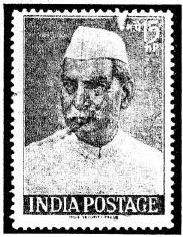
Question 1. Identify the person in the picture.
Answer: The person shown in the stamp is Dr. Rajendra Prasad.
In simple words: The picture shows Dr. Rajendra Prasad, who was our country's first President.
Exam Tip: Be sure to write the full name "Dr. Rajendra Prasad" clearly.
Question 2. Name two other prominent members of the Constituent Assembly.
Answer: Two other key members were Dr. B. R. Ambedkar and Maulana Abul Kalam Azad.
In simple words: Dr. B. R. Ambedkar and Maulana Azad were two other famous leaders in the assembly.
Exam Tip: Memorizing popular leaders like Dr. Ambedkar, Maulana Azad, or Jawaharlal Nehru helps with these questions.
Question 3. When was the first meeting of the Constituent Assembly held?
Answer: The assembly gathered for its very first session on 9th December, 1946.
In simple words: The group had their first meeting on December 9, 1946.
Exam Tip: Remember December 9, 1946 as the official beginning of India's constitutional drafting process.
Question 4. When did the Constitution come into force?
Answer: The Constitution officially became active on 26th January, 1950.
In simple words: It came into use on January 26, 1950, which is why we celebrate Republic Day.
Exam Tip: Do not confuse this with the date it was adopted (26th November, 1949).
Question 5. What is the introduction to the Constitution called? What does it tell us about the source of the Constitution?
Answer: The opening section of the Constitution is known as the Preamble. It helps us understand the hopes and dreams of the people who created it. It points out that the true power behind the Constitution is the citizens of India, while also explaining the country's main values and goals.
In simple words: The Preamble is the introduction. It tells us that the Constitution gets its power directly from the people of India.
Exam Tip: Clearly state that the introduction is called the "Preamble" and that "We, the People" are the ultimate source of its power.
Question 6. Mention the objectives stated in the introduction.
Answer: The central goals listed in the Preamble are:
- Justice: Ensuring that every citizen is treated fairly under the law and no one is left behind.
- Liberty: Giving every citizen the freedom to speak, think, and practice their chosen faith.
- Equality: Treating all people equally and ensuring they are safe under the same set of laws.
- Fraternity: Promoting a sense of family and unity among all citizens to keep the country strong.
In simple words: The main goals are fairness (Justice), freedom (Liberty), equal rights (Equality), and brotherhood (Fraternity) for all.
Exam Tip: Be prepared to list and explain all four core objectives - Justice, Liberty, Equality, and Fraternity - in exams.
Free study material for History Civics
ICSE Selina Concise Solutions Class 7 History Civics Chapter 1 The Constitution of India
Students can now access the detailed Selina Concise Solutions for Chapter 1 The Constitution of India on our portal. These solutions have been carefully prepared as per latest ICSE Class 7 syllabus. Each solution given above has been updated based on the current year pattern to ensure Class 7 students have the most updated History Civics content.
Master Selina Concise Textbook Questions
Our subject experts have provided detailed explanations for all the questions found in the Selina Concise textbook for Class 7 History Civics. We have focussed on making the concepts easy for you in Chapter 1 The Constitution of India so that students can understand the concepts behind every answer. For all numerical problems and theoretical concepts these solutions will help in strengthening your analytical skill required for the ICSE examinations.
Complete History Civics Exam Preparation
By using these Selina Concise Class 7 solutions, you can enhance your learning and identify areas that need more attention. We recommend solving the History Civics Questions from the textbook first and then use our teacher-verified answers. For a proper revision of Chapter 1 The Constitution of India, students should also also check our Revision Notes and Sample Papers available on studiestoday.com.
FAQs
You can download the verified Selina Concise solutions for Chapter 1 The Constitution of India on StudiesToday.com. Our teachers have prepared answers for Class 7 History Civics as per 2026-27 ICSE academic session.
Yes, our solutions for Chapter 1 The Constitution of India are designed as per new 2026 ICSE standards. 40% competency-based questions required for Class 7, are included to help students understand application-based logic behind every History Civics answer.
Yes, every exercise in Chapter 1 The Constitution of India from the Selina Concise textbook has been solved step-by-step. Class 7 students will learn History Civics conceots before their ICSE exams.
Yes, follow structured format of these Selina Concise solutions for Chapter 1 The Constitution of India to get full 20% internal assessment marks and use Class 7 History Civics projects and viva preparation as per ICSE 2026 guidelines.