

Access the latest CBSE Class 12 Accountancy Cash Flow Statement Worksheet Set 01. We have provided free printable Class 12 Accountancy worksheets in PDF format, specifically designed for Part 2 Chapter 6 Cash Flow Statement. These practice sets are prepared by expert teachers following the 2025-26 syllabus and exam patterns issued by CBSE, NCERT, and KVS.
Part 2 Chapter 6 Cash Flow Statement Accountancy Practice Worksheet for Class 12
Students should use these Class 12 Accountancy chapter-wise worksheets for daily practice to improve their conceptual understanding. This detailed test papers include important questions and solutions for Part 2 Chapter 6 Cash Flow Statement, to help you prepare for school tests and final examination. Regular practice of these Class 12 Accountancy questions will help improve your problem-solving speed and exam accuracy for the 2026 session.
Download Class 12 Accountancy Part 2 Chapter 6 Cash Flow Statement Worksheet PDF
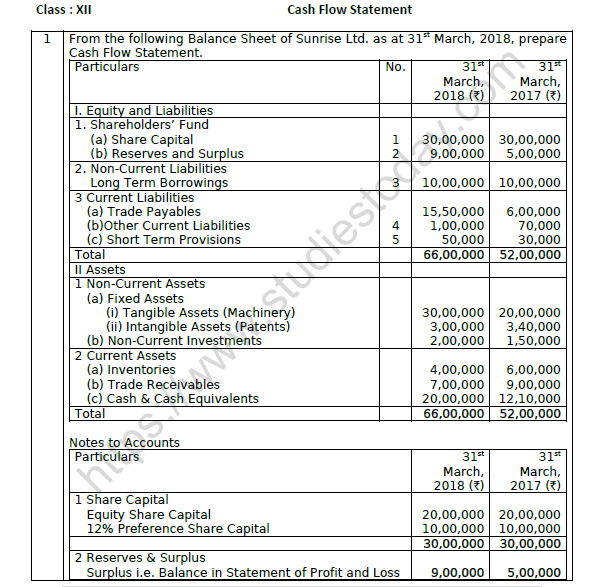
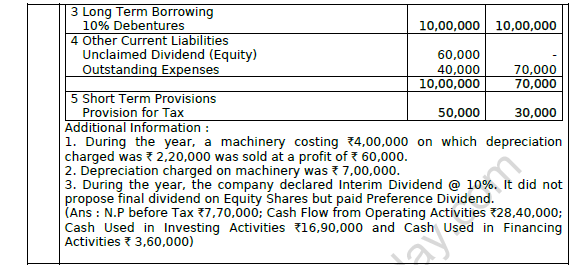
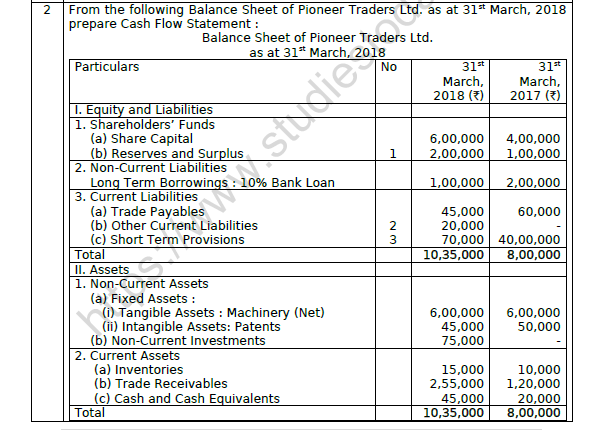
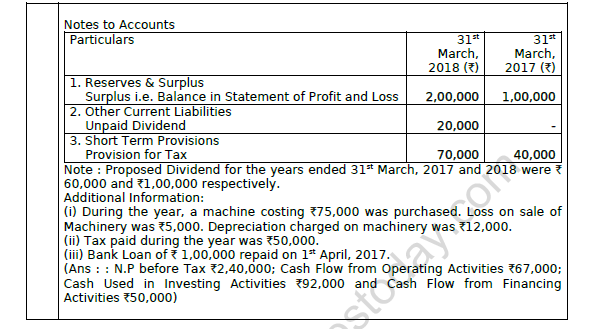
True/False
Question 21. Interest paid on debentures is added to Net profit before tax and extraordinary items, being non-cash expenses.
Answer: False
In simple words: Interest paid on debentures is a cash outflow and is subtracted from profit, not added. It is not a non-cash expense like depreciation.
Exam Tip: Cash expenses (interest, tax, wages actually paid) are deducted from profit; non-cash expenses (depreciation, amortization) are added back.
Question 22. Operating activities are the principal revenue producing activities of an enterprise and those activities which are not investing or financing activities.
Answer: True
In simple words: Operating activities are exactly what the company does to earn its main revenue. Anything that is not buying/selling long-term assets or raising/repaying money counts as operating.
Exam Tip: This definition is key — operating activities include the day-to-day work of the business.
Question 23. Marketable securities are included in cash and cash equivalents.
Answer: True
In simple words: Marketable securities that can be turned into cash quickly are treated as cash equivalents. They count as liquid money available to the business.
Exam Tip: Cash equivalents are short-term, highly liquid investments easily converted to cash — not all investments qualify.
Question 24. Income tax paid can never be shown as investing or financing activities.
Answer: False
In simple words: Income tax paid is classified as an operating activity, not investing or financing. The statement is true, so the answer "False" is given to the question which says it can "never" be shown — it is always shown as operating.
Exam Tip: Income tax is always an operating activity because it results from operating profits.
Question 25. Amount transferred to General Reserve is shown under financing activities in the Cash Flow Statement.
Answer: False
In simple words: Transfer to general reserve is not a cash outflow — it is just a movement within the equity section. Since no cash leaves the company, it is not shown in the cash flow statement at all.
Exam Tip: Internal transfers (like setting aside profit as a reserve) do not involve cash movement and are excluded from cash flow statements.
Fill in the Blanks
Question 26. Purchase and sale of securities by a ____________ company is an operating activity.
Answer: financing
In simple words: A financing company like a bank or investment firm buys and sells securities as its main business, so these are operating activities for them.
Exam Tip: Remember that what counts as "operating" depends on the type of company — it is the main business for that company.
Question 27. Patent purchased and completely amortised in the year of purchase is added under ____________ and shown as Outflow under ______________.
Answer: operating activities, operating activities
In simple words: When a patent is fully amortized in one year, the full cost is expensed. This is added back to profit (as a non-cash item) and shown as an outflow (as a cash expense) in operating activities.
Exam Tip: Amortization is a non-cash expense that must be adjusted when calculating operating cash flow.
Question 28. Dividend paid is always shown as ____________ in the Cash Flow Statement.
Answer: financing activity
In simple words: Paying dividends to investors is a financing activity because the company is returning profits to those who financed it.
Exam Tip: Dividends are always financing activities; remember this consistently for every type of business.
Question 29. Short-term deposits are shown as ______________.
Answer: cash and cash equivalents
In simple words: Short-term deposits can be turned into cash very quickly, so they are treated the same way as actual cash on the balance sheet and cash flow statement.
Exam Tip: Cash equivalents are typically investments that mature in 90 days or less from purchase.
Question 30. Proceeds from the sale of fixed assets is shown under ____________ in the Cash Flow Statement.
Answer: investing activities
In simple words: Selling fixed assets like machinery or buildings is an investing activity because the company is getting cash back from its investments in long-term assets.
Exam Tip: All transactions involving fixed assets (purchase or sale) belong to investing activities.
Question 24. Under which type of activity, will you classify 'Commission and Royalty Received' while preparing Cash Flow Statement?
Answer: Operating Activity.
In simple words: Commission and royalty earned are gains from the day-to-day running of the business, so they go in the operating activities part.
Exam Tip: Remember that any revenue or income linked to regular business operations is always operating activity — whether it's sales, service fees, commission, or royalty.
Question 25. State with reason whether 'Purchase of fixed asset on long-term deferred payment' would result in inflow, outflow or no flow of cash.
Answer: There is no flow of cash because buying a fixed asset on credit will not impact cash. The transaction involves a future liability rather than an immediate cash outflow at the time of purchase.
In simple words: When you buy something on credit to be paid later, cash does not leave your hands right now, so there is no cash flow impact today.
Exam Tip: The key is to focus on whether cash actually moves. On-credit purchases create liabilities but no immediate cash outflow, so the cash flow is zero.
Question 26. Give an example of the activity which remains financing activity for every enterprise.
Answer: Payment of Dividend on Shares.
In simple words: Paying money to shareholders as dividends is a financing activity in every business because it involves returning profits to the owners.
Exam Tip: Financing activities are those that involve getting money from or paying money to the owners and lenders — dividend payments fit this definition in all companies.
Question 27. State with reason whether 'Old furniture written off' would result into inflow, outflow or no flow of cash.
Answer: No flow because old furniture written off does not involve cash. It is a non-cash expense.
In simple words: Writing off old furniture is just an accounting entry to remove it from the books — no actual cash is paid out.
Exam Tip: Non-cash expenses like depreciation, write-offs, and amortisation never impact cash flow — they are paper losses only.
Question 28. State with reason whether deposit of Cash into Bank will result into inflow, outflow or no flow of cash.
Answer: No flow of cash because it simply represents the movement between items of cash or cash equivalents.
In simple words: Moving cash from one pocket to another (hand to bank) does not create or destroy cash — it just shifts it around.
Exam Tip: Cash transfers within the business — like depositing money into the bank — have zero net effect on total cash and do not count as cash flow.
Question 29. State whether the payment of cash to creditors will result in inflow, outflow or no flow of cash.
Answer: Outflow of cash as cash is decreasing.
In simple words: When you pay your suppliers or creditors, money goes out of your bank account, so it is an outflow.
Exam Tip: Any payment to external parties (suppliers, creditors, employees, lenders) is a cash outflow and must be shown as such in the cash flow statement.
Question 30. 'Sale of marketable securities at par' would result in inflow, outflow or no flow of cash? Give your answer with reason.
Answer: No flow of cash because cash includes marketable securities.
In simple words: Selling securities that are already treated as part of cash and equivalents does not generate new cash — it is just converting one form of liquid asset into another.
Exam Tip: Marketable securities are considered equivalents of cash, so trading them does not affect the actual cash balance — it remains zero flow.
Question 31. Under which type of activity will you classify 'cash received from debtors' while preparing Cash Flow Statement?
Answer: Operating Activity.
In simple words: Cash from customers who owe you money is part of collecting payment for goods or services sold — this is the core operating activity.
Exam Tip: Any cash related to the main business operations — whether from sales, services, or collection from debtors — belongs to operating activities.
Question 32. What is meant by 'Cash Flow from Investing Activities'?
Answer: Investing activities involve the purchase and sale of long-term assets. These assets also include the purchase and sale of such investments which are not marketable securities.
In simple words: Investing activities are when a business buys or sells long-lasting assets (like property and machinery) and long-term investments (like stocks and bonds that the business plans to hold for years).
Exam Tip: Key words for investing activities are "long-term assets" and "non-current assets" — focus on the time period to decide if something is investing activity.
Question 33. Give any two examples of investing activities of a finance company.
Answer: (i) Purchase of Building. (ii) Purchase of Patents.
In simple words: A finance company invests money by buying buildings (physical assets) and patents (intangible assets) to grow its business and hold for the long term.
Exam Tip: Investing activities for any company — finance or otherwise — include buying fixed assets, intangible assets, and long-term investments.
Question 34. Manvi Finance Ltd. is a company engaged in the business of financing securities. In its Cash Flow Statement, it has shown interest earned under the Financing Activity. Do you think it is a correct presentation? Give reasons to your answer.
Answer: The business of Manvi Finance Ltd. is financing the securities. Thus, in this case interest earned by the company is its Operating Activity. Therefore, the presentation of interest earned as financing activity is not correct. For a finance company, earning interest on securities financed is the core revenue-generating function of the business.
In simple words: A finance company makes money by lending and earning interest — this is their main business, not a side activity, so interest must be shown under operating activities.
Exam Tip: Always check what the company's main business is — for a finance company, lending and interest are operating activities; for others, they might be classified differently.
Question 35. Where will you classify factory expenses for both finance and non-finance companies and why?
Answer: Factory expenses of a business enterprise will be classified under operating activities for both finance and non-finance companies as factory expenses are related to main revenue generating activities of an organisation.
In simple words: Whether a company finances or manufactures, factory costs are always part of making the product or service that brings in money, so they stay in operating activities.
Exam Tip: Expenses tied to revenue generation — whether factory costs, labour, or materials — are always operating expenses regardless of what type of company it is.
Question 36. When and why is 'receipt of dividend' classified under operating activities?
Answer: In case of financial companies, receipt of dividend is classified as operating activities as for financial companies receipt of dividend is considered main revenue generating activity of business.
In simple words: For a finance or investment company, collecting dividends from shareholdings is how they earn money, just like a manufacturing company earns from selling goods.
Exam Tip: The classification depends on the nature of the business — if receiving dividends is how the company makes its main income, it is operating activity.
Short Answer Questions [3, 4 marks]
Question 1. Calculate Cash from Operating Activities from the following information:
Income Statement
for the year ended 31st March, 2015
| Particulars | Note No. | (Rs) |
|---|---|---|
| I. Revenue from Operations | 2,00,000 | |
| II. Other Income | 1 | 1,00,000 |
| III. Total Revenue (I + II) | 3,00,000 | |
| IV. Expenses | ||
| Cost of Materials Consumed | 80,000 | |
| Employee Benefit Expenses | 60,000 | |
| Depreciation and Amortisation Expenses | 30,000 | |
| Other Expenses | 2 | 15,000 |
| Total Expenses | 1,85,000 | |
| V. Profit before Tax (III - IV) | 1,15,000 | |
| VI. Income Tax Paid | 20,000 | |
| VII. Profit after Tax (V - VI) | 95,000 |
Notes to Accounts
| Particulars | (Rs) |
|---|---|
| 1. Other Income: | |
| Profit on Sale of Land | 1,00,000 |
| 2. Other Expenses: | |
| Loss on sale of machinery | 15,000 |
Current Assets and Current Liabilities
| Particulars | 31st March 2015 (Rs) | 31st March 2014 (Rs) |
|---|---|---|
| Trade Receivables | 45,000 | 50,000 |
| Accrued Incomes | 6,000 | 4,000 |
| Advance Incomes | 15,000 | 12,000 |
| Trade Payables | 40,000 | 35,000 |
| Outstanding Expenses | 3,000 | 4,000 |
| Prepaid Expenses | 1,500 | 1,000 |
| Inventories | 60,000 | 80,000 |
Answer:
Calculation of Cash from Operating Activities
[As per AS3 (Revised)]
| Particulars | (Rs) | (Rs) | |
|---|---|---|---|
| Net Profit before tax (Net profit Rs 95,000 + Income tax Rs 20,000) |
1,15,000 | ||
| Add: Items to be added back | |||
| Depreciation and Amortisation Expenses | 30,000 | ||
| Loss on sale of machinery | 15,000 | ||
| Less: Profit on Sale of Land | (1,00,000) | 33,000 | |
| Operating profit before working capital changes | 60,000 | ||
| Add: Decrease in Current Assets: | |||
| Trade Receivables | 5,000 | ||
| Inventories | 20,000 | ||
| Add: Increase in Current Liabilities: | |||
| Trade Payables | 5,000 | ||
| Advance Incomes | 3,000 | 33,000 | |
| 93,000 | |||
| Less: Increase in Current Assets: | |||
| Accrued Incomes | (2,000) | ||
| Prepaid Expenses | (500) | ||
| Less: Decrease in Current Liabilities: | |||
| Outstanding Expenses | (1,000) | (3,500) | |
| Cash generated from operations | 89,500 | ||
| Less: Income Tax Paid | 20,000 | ||
| Net Cash generated from Operating Activities | 69,500 |
Exam Tip: Always start with profit, add back non-cash expenses (like depreciation), subtract non-cash gains (like profit on sale), then adjust for working capital changes — this gives you the true operating cash.
Question 2. From the following information, calculate the amount of cash flows from Investing Activities:
| Particulars | 31st March, 2015 (Rs) | 31st March, 2016 (Rs) |
|---|---|---|
| Plant and Machinery | 8,50,000 | 10,00,000 |
| Non-current Investments | 40,000 | 1,00,000 |
| Land (At cost) | 2,00,000 | 1,00,000 |
Additional Information:
(i) Depreciation charges on Plant and Machinery Rs 50,000.
(ii) Plant and Machinery with a book value of Rs 60,000 was sold for Rs 40,000.
(iii) Land was sold at a profit of Rs 60,000.
(iv) No investment was sold during the year.
Answer: Calculation of Cash Flows from Investing Activities:
| Particulars | (Rs) |
|---|---|
| Sale of Plant and Machinery | 40,000 |
| Sale of Land (see W.N. 1) | 1,60,000 |
| Purchase of Plant and Machinery (see WN 2) | (2,60,000) |
| Purchase of Investments | (60,000) |
| Net Cash used in Investing Activities | (1,20,000) |
Working Notes:
1. Dr. Land Account Cr.
| Particulars | (Rs) | Particulars | (Rs) |
|---|---|---|---|
| To Balance b/d | 2,00,000 | By Cash A/c (Sale) (Bal. Fig.) | 1,60,000 |
| To Statement of Profit and Loss (Profit on sale of land) | 60,000 | By Balance c/d | 1,00,000 |
| 2,60,000 | 2,60,000 |
2. Dr. Plant and Machinery Account Cr.
| Particulars | (Rs) | Particulars | (Rs) |
|---|---|---|---|
| To Balance b/d | 8,50,000 | By Depreciation A/c | 50,000 |
| To Cash A/c (Purchase) (Bal. Fig.) | 2,60,000 | By Cash A/c (Sale) | 40,000 |
| By Loss on Sale of Machinery | 20,000 | ||
| By Balance c/d | 10,00,000 | ||
| 11,10,000 | 11,10,000 |
Exam Tip: For investing activities, focus on actual cash paid and received — work backward from the balance sheet figures using T-accounts to find the cash impact of each asset sale or purchase.
Question 3. From the following information, calculate the amount of cash flows from Investing Activities:
| Particulars | (Rs) |
|---|---|
| Land Acquired during the year | 5,00,000 |
| Non-current Investment purchased | 2,70,000 |
| Fixed Tangible Assets (Machinery) purchased | 4,50,000 |
| Fixed Tangible Assets (Building) sold | 6,00,000 |
| Sale of Non-current Investments | 1,60,000 |
| Sale of Tangible Fixed Assets (Machinery) | 2,10,000 |
| Receipt for permission of use of Trademarks | 90,000 |
| Interest received on Debentures held as investments | 20,000 |
| Dividend received on shares held as investment | 30,000 |
Answer: Calculation of Cash Flows from Investing Activities:
| Particulars | (Rs) | |
|---|---|---|
| Cash received from sale of Building | 6,00,000 | |
| Cash received from sale of Investment | 1,60,000 | |
| Cash received from sale of Machinery | 2,10,000 | |
| Cash received for permission granted for use of Trademarks | 90,000 | |
| Cash received for interest or Debentures held as investment | 20,000 | |
| Cash received for dividend on shares held as investment | 30,000 | 11,10,000 |
| Cash used for purchase of Land | (5,00,000) | |
| Cash used for purchase of non-current Investment | (2,70,000) | |
| Cash used for purchase of Machinery | (4,50,000) | (12,20,000) |
| Net Cash used in Investing Activities | (1,10,000) |
Exam Tip: Categorise each item carefully — inflows from sale of assets and receipts from investments, outflows from purchase of assets. Never ignore interest or dividend received on long-term investments held.
Question 4. XYZ Ltd. provided the following information, calculate net cash flows from financing activities:
| Particulars | 31st March, 2015 (Rs) | 31st March, 2016 (Rs) |
|---|---|---|
| Equity Share Capital | 10,00,000 | 12,00,000 |
| 12% Long-term Borrowings (Debentures) | 1,00,000 | 2,00,000 |
Additional Information:
(i) Interest paid on Debentures Rs 12,000
(ii) Dividend paid Rs 50,000.
Answer: Calculation of Cash Flows from Financing Activities:
| Particulars | (Rs) |
|---|---|
| Cash inflow from issue of Equity Shares | 2,00,000 |
| Cash inflow from issue of Debentures | 1,00,000 |
| Less: Interest paid on Debentures | (12,000) |
| Less: Dividend paid | (50,000) |
| Net Cash generated from Financing Activities | 2,38,000 |
Exam Tip: Financing activities show how the business gets money from shareholders and lenders (inflows) and what it pays to them as interest and dividends (outflows) — always calculate net changes in capital and borrowings first.
Question 1. Following is the Balance Sheet of K.K. Ltd. as at 31st March, 2015: Prepare Cash Flow Statement.
Answer: Cash Flow Statement of K.K. Ltd. for the year ended 31st March, 2015 as per AS-3 (Revised)
| Particulars | Amount (₹) | Amount (₹) |
|---|---|---|
| A. Cash Flows from Operating Activities: | ||
| Net Profit before tax and extraordinary items (note 1) | 6,00,000 | |
| Add: Non-cash and non-operating charges | ||
| Goodwill written off | 20,000 | |
| Depreciation on machinery | 1,98,000 | |
| Interest on debentures | 1,20,000 | |
| Operating-profit before working capital changes | 9,38,000 | |
| Less: Increase in Current Assets: | ||
| Increase in Inventories | (1,24,000) | |
| Cash from operations | 8,14,000 | |
| Less: Tax paid | (1,40,000) | |
| Net Cash generated from Operating Activities | (A) 6,74,000 | |
| B. Cash Flows from Investing Activities: | ||
| Purchase of machinery | (7,64,000) | |
| Purchase on non-current investments | (50,000) | |
| Net Cash used in investing activities | (B) (8,14,000) | |
| C. Cash Flows from Financing Activities: | ||
| Issue of share capital | 2,00,000 | |
| Redemption of 12% debentures | (1,00,000) | |
| Interest on debentures paid | (1,20,000) | |
| Bank overdraft raised | 2,00,000 | |
| Net Cash flow from financing activities | (C) 1,80,000 | |
| Net increase in cash and cash equivalents (A + B + C) | 40,000 | |
| Add: Cash and Cash Equivalents in the beginning of the year | ||
| Current investments | 1,20,000 | |
| Cash and Cash Equivalents | 1,20,000 | 2,40,000 |
| Cash and Cash Equivalents at the end of the year | ||
| Current investments | 1,00,000 | |
| Cash and Cash Equivalents | 1,80,000 | 2,80,000 |
In simple words: The cash flow shows how much cash came in and went out through three main areas - running the business, buying assets, and handling borrowing and share issues. All these flows add together to show the net change in cash at the end of the year.
Exam Tip: Always verify the cash balance at the end by adding beginning balance plus net increase (A+B+C). Make sure to include all non-cash items (depreciation, goodwill) when calculating operating cash flows.
Question 2. Prepare a Cash Flow Statement on the basis of the information given in the Balance Sheets of Liva Ltd. as at 31-3-2016 and 31-3-2017.
Answer: Cash Flow Statement of Liva Ltd. for the year ended 31st March, 2017
| Particulars | (₹) | (₹) |
|---|---|---|
| 1. Cash Flow from Operating Activities: | ||
| (A) Net Profit before Taxation | 1,08,000 | |
| (B) Adjustments for non-cash and non-operating items | ||
| (C) Operating profit before working capital changes | 1,08,000 | |
| (D) Add: Decrease in Current Assets and Increase in Current Liabilities | ||
| Increase in Trade Payables | 48,000 | |
| (E) Less: Increase in Current Assets and Decrease in Current Liabilities | ||
| Increase in Trade Receivables | (22,500) | |
| Increase in Inventories | (83,000) | |
| Cash generated from Operating Activities: (C + D - E) | (X) 50,500 | |
| 2. Cash Flow from Investing Activities: | ||
| Purchase of Fixed Assets | (42,000) | |
| Purchase of Non-Current Investments | (30,000) | |
| Net Cash used in Investing Activities | (Y) (72,000) |
In simple words: This cash flow shows money coming from running the business minus the purchases of assets. The company earned cash from operations but spent more on buying fixed assets and investments.
Exam Tip: Focus on working capital changes - these show how movements in receivables, payables, and inventory affect cash. Always adjust profit by adding back non-cash expenses and deducting non-cash income.
Question 3. Following is the Balance Sheet of Wisben Ltd. as on 31st March, 2017: Prepare a Cash Flow Statement.
Answer: Cash Flow Statement for the year ended 31st March, 2017
A. Cash Flow from Operating Activities:
Net Profit before Taxation: Rs. 90,000
Adjustments for non-cash and non-operating items to be added back:
Depreciation for the year: Rs. 2,00,000
Loss on Sale of Machinery: Rs. 15,000
Operating profit before working capital changes: Rs. 3,05,000
Add: Decrease in Current Assets and Increase in Current Liabilities
Decrease in Trade Receivables: Rs. 8,000
Increase in Trade Payables: Rs. 5,000
Less: Increase in Current Assets: Increase in Inventories: (Rs. 10,000)
Net Cash Flow from Operating Activities: Rs. 3,08,000
B. Cash Flow from Investing Activities:
Purchase of Machinery: (Rs. 5,80,000)
Sale of Machinery: Rs. 65,000
Net Cash used in Investing Activities: (Rs. 5,15,000)
C. Cash Flow from Financing Activities:
Proceeds from issuance of Share Capital: Rs. 1,00,000
Proceeds from Long-term Borrowings: Rs. 1,00,000
Net Cash Flow from Financing Activities: Rs. 2,00,000
Net Decrease in Cash and Cash Equivalents (A - B + C): (Rs. 7,000)
Add: Cash and Cash Equivalents in the beginning of the year: Rs. 35,000
Cash and Cash Equivalents at the end of the year: Rs. 28,000
In simple words: A cash flow statement shows how money moved in and out of the company during the year. Operating activities include earnings and changes in working capital. Investing activities involve buying and selling assets. Financing activities cover money from shareholders and borrowings.
Exam Tip: Always ensure the final cash balance from the cash flow statement matches the cash shown in the Balance Sheet. Verify all three activity sections are included and that the arithmetic is correct.
Question 4. From the following Balance Sheet of Mayur Ltd. and the additional information as at 31st March, 2018, prepare a Cash Flow Statement.
Answer: Cash Flow Statement of Mayur Ltd. for the year ended 31st March, 2018 as per AS-3 (Revised)
A. Cash Flow from Operating Activities:
Net Profit before Tax & Extraordinary items: (Rs. 24,000)
Add: Non cash and non-operating charges
Loss on Sale of Machinery (total assets): Rs. 17,000
Depreciation: Rs. 2,73,000
Interest on Debentures: Rs. 27,000
Operating profit before working capital changes: Rs. 2,93,000
Add: Decrease in Current Assets/Increase in Current Liabilities
Decrease in inventories: Rs. 10,000
Decrease in trade receivables: Rs. 20,000
Total additions from working capital: Rs. 30,000 to Rs. 3,23,000
Less: Increase in Current Assets/Decrease in Current Liabilities
Decrease in trade payables: (Rs. 80,000)
Cash generated from Operations: Rs. 2,43,000
Less: Tax Paid during the year: (Rs. 64,000)
Net Cash generated from Operating Activities: Rs. 1,79,000
B. Cash Flow from Investing Activities:
Purchase of Machinery (Total Assets): (Rs. 12,00,000)
Sale of Machinery (Total Assets): Rs. 3,10,000
Purchase of Goodwill (Intangible assets): (Rs. 1,10,000)
Net Cash used in Investing Activities: (Rs. 10,00,000)
C. Cash Flow from Financing Activities:
Issue of Share Capital: Rs. 10,00,000
Issue of 9% Debentures: Rs. 1,00,000
Interest on 9% Debentures: (Rs. 27,000)
Net Cash flow from financing activities: Rs. 10,73,000
Net increase in Cash & Cash Equivalents during the year (A + B + C): Rs. 2,52,000
Add: Cash and Cash Equivalents in the beginning of the year: Rs. 1,94,000
Cash and Cash Equivalents at the end of the year: Rs. 4,46,000
In simple words: The cash flow statement breaks down all cash movements into three categories: operations (day-to-day business), investments (buying or selling assets), and financing (raising money or paying borrowings). By combining these three sections, we see the total change in cash for the year.
Exam Tip: When preparing a cash flow statement, separate non-cash expenses like depreciation from actual cash outflows. Check that the opening balance of cash matches the prior year's ending balance.
Question 5. Following is the Balance Sheet of Thermal Power Ltd. as at 31-3-2014:
Answer: This question presents the Balance Sheet of Thermal Power Ltd. as at 31-3-2014. The balance sheet shows:
I. EQUITY AND LIABILITIES
(1) Shareholders' Funds
(a) Share Capital: Rs. 12,00,000 (2013-14) and Rs. 11,00,000 (2012-13)
(b) Reserves and Surplus: Rs. 3,00,000 (2013-14) and Rs. 2,00,000 (2012-13)
(2) Non-current Liabilities
Long-term Borrowings: Rs. 2,40,000 (2013-14) and Rs. 1,70,000 (2012-13)
(3) Current Liabilities
(a) Trade Payables: Rs. 1,79,000 (2013-14) and Rs. 2,04,000 (2012-13)
(b) Short-term Provisions: Rs. 50,000 (2013-14) and Rs. 77,000 (2012-13)
Total: Rs. 19,69,000 (2013-14) and Rs. 17,51,000 (2012-13)
In simple words: A balance sheet lists what a company owns (assets) and what it owes (liabilities and equity) on a particular date. It helps us see the company's financial position and spot changes year to year.
Exam Tip: When analyzing a balance sheet, compare corresponding items between two years to identify trends in the company's financial position.
Question 1. From the following Balance Sheet of Thermal Power Ltd., prepare Cash Flow Statement.
Answer: Cash Flow Statement of Thermal Power Ltd. for the year ended 31st March, 2014 as per AS-3 (Revised)
| Particulars | (Rs) | (Rs) |
|---|---|---|
| Cash Flow from Operating Activities: | ||
| Net Profit before tax & extraordinary items | 1,00,000 | |
| Add: Non-cash and Non-operating charges | ||
| Goodwill written off | 72,000 | |
| Depreciation on machinery (WN2) | 66,000 | |
| Loss on sale of machinery (WN1) | 2,000 | 2,40,000 |
| Operating profit before working capital changes | 2,40,000 | |
| Less: Increase in Current Assets: | ||
| Increase in trade receivables | (27,000) | |
| Increase in inventories | (8,000) | |
| Less: Decrease in Current Liabilities: | ||
| Decrease in trade payables | (25,000) | |
| Decrease in Short-term provisions | (27,000) | |
| Cash generated from Operating Activities | (A) 1,53,000 1,53,000 | |
| Cash Flow from Investing Activities: | ||
| Purchase of Machinery | (2,94,000) | |
| Sale of Machinery | 6,000 | |
| Cash used in Investing Activities | (B) (2,88,000) (2,88,000) | |
| Cash Flows from Financing Activities: | ||
| Issue of share capital | 1,00,000 | |
| Money raised from borrowings | 70,000 | |
| Cash flow from financing activities | (C) 1,70,000 1,70,000 | |
| Net increase in cash and cash equivalents (A - B + C) | 35,000 | |
| Add: Opening balance of cash and cash equivalents: | ||
| Current Investments | 1,50,000 | |
| Cash and Cash equivalents | 3,75,000 | 5,25,000 |
| Closing balance of cash and cash equivalents: | ||
| Current Investments | 2,40,000 | |
| Cash and Cash equivalents | 3,20,000 | 5,60,000 |
In simple words: The cash flow statement shows how a company's cash position changed during the year. It starts with profit, adds back non-cash items like depreciation, adjusts for changes in working capital, and then shows cash used in investing activities and raised from financing activities. The final figure reveals the net change in cash.
Exam Tip: Always prepare working notes separately for non-cash items and changes in working capital — this shows the examiner your systematic approach and helps avoid calculation errors.
Question 2. From the following Balance Sheet of Ashok Ltd., prepare Cash Flow Statement.
Answer: Cash Flow Statement for the year ended 31st March, 2018
| Particulars | (Rs) | (Rs) |
|---|---|---|
| I. Cash Flow from Operating Activities: | ||
| Net Profit before Tax and Extraordinary items (WN1) | 1,60,000 | |
| Add: Non-cash/Non-operating Expenses: | ||
| Depreciation | 20,000 | |
| Goodwill Amortised | 10,000 | 30,000 |
| Less: Non-operating Income: | ||
| Gain (Profit) on Sale of Land and Building | 7,500 | |
| Operating Profit before Working Capital Changes | 1,82,500 | |
| Less: Decrease in Current Liabilities and Increase in Current Assets: | ||
| Trade Payables | 5,000 | |
| Trade Receivables | 25,000 | |
| Inventories | 40,000 | 70,000 |
| Cash Generated from Operating Activities | (A) 1,12,500 80,000 | |
| Less: Income Tax Paid (Rs 40,000 - Rs 7,500) | 32,500 | |
| Cash Flow from Operating Activities | (A) 80,000 | |
| II. Cash Flow from Investing Activities: | ||
| Proceeds from Sale of Land and Building (WN2) | 82,500 | |
| Purchase of Non-current Investments | (3,00,000) | |
| Cash used in Investing Activities | (B) (2,17,500) | |
| III. Cash Flow from Financing Activities: | ||
| Proceeds from Issue of Shares | 2,50,000 | |
| Payments for Redemption of 10% Debentures | (1,00,000) | |
| Proceeds from Bank Loan | 50,000 | |
| Payment of Dividend (Proposed dividend of previous year) | (37,500) | |
| Payment of Dividend Distribution Tax | (7,500) | |
| Cash Flow from Financing Activities | (C) 1,55,000 | |
| IV. Net Increase in Cash and Cash Equivalents (A + B + C) | 17,500 | |
| Add: Opening Cash and Cash Equivalents | 1,70,000 | |
| V. Closing Cash and Cash Equivalents | 1,87,500 | |
In simple words: This statement tracks how cash moved in and out of the company from three main activities - running the business, buying or selling long-term assets, and raising or returning funds. The bottom line shows the final cash balance after all these movements.
Exam Tip: When computing the impact of working capital changes, remember that increases in current assets use cash (shown as negative) while decreases provide cash. For liabilities, it works the opposite way.
Question 3. From the following particulars, prepare Cash Flow Statement (as per AS-3).
Answer: Cash Flow Statement for the year ended 31st March, 2016
| Particulars | Note No. | 31st March, 2016 (Rs) | 31st March, 2015 (Rs) |
|---|---|---|---|
| I. EQUITY AND LIABILITIES | |||
| 1. Shareholders' Funds | |||
| (a) Share Capital | 1 | 1,00,000 | 80,000 |
| (b) Reserves and Surplus | 2 | 6,400 | 6,000 |
| 2. Non-current Liabilities | |||
| (a) Long-term Borrowings | 3 | - | - |
| 3. Current Liabilities | |||
| (a) Trade Payables | 4 | - | - |
| (b) Short-term Provisions | 5 | - | - |
| II. ASSETS | |||
| 1. Non-current Assets | |||
| (a) Fixed Assets | |||
| (i) Tangible Assets | 6 | 1,00,000 | 80,000 |
| (b) Non-current Investments | 2,400 | - | |
| 2. Current Assets | |||
| (a) Inventories | - | - | |
| (b) Trade Receivables | - | - | |
| (c) Cash and Cash Equivalents | 7 | 4,000 | 6,000 |
In simple words: The Balance Sheet shows what a company owns (assets) and what it owes (liabilities) on specific dates. Comparing two years reveals the changes needed to prepare the cash flow statement.
Exam Tip: Always ensure the balance sheet balances - total assets must equal total liabilities plus equity. This is the foundation for preparing an accurate cash flow statement.
Question 1. From the following Balance Sheets of Samir Ltd. and additional information, prepare Cash Flow Statement:
Answer: The Cash Flow Statement for the year ended 31st March, 2016 has been prepared as follows:
| Particulars | (₹) | (₹) |
|---|---|---|
| 1. Cash Flow from Operating Activities: | ||
| (A) Net Profit before Taxation: | 28,800 | |
| (B) Items to be added: | ||
| Depreciation | 14,000 | |
| Loss on Sale of Fixed Assets | 4,000 | |
| Interest on Debentures | 1,800 | |
| (C) Operating profit before working capital changes (A+B) | 48,600 | |
| (D) Less: Increase in Current Assets: | ||
| Trade Receivables | (8,000) | |
| Inventories | (8,400) | |
| Prepaid Expenses | (400) | |
| Less: Decrease in Current Liabilities: | ||
| Trade Payables | (2,000) | |
| (E) Cash generated from operations (C - D) | 29,800 | |
| (F) Less: Tax paid | (7,000) | |
| (G) Net Cash generated from Operating Activities (E - F) | 22,800 | |
| 2. Cash Flow from Investing Activities: | ||
| Sale of fixed assets | 10,000 | |
| Purchase of fixed assets | (18,000) | |
| Net Cash used in Investing Activities | (8,000) | |
| 3. Cash Flow from Financing Activities: | ||
| Issue of Preference Shares | 20,000 | |
| Issue of Debentures | 2,000 | |
| Interim Dividend Paid | (9,000) | |
| Payment of Dividend (Proposed Dividend of previous year) | (10,000) | |
| Payment of Bank Overdraft | (11,400) | |
| Interest on Debentures | (1,800) | |
| Net Cash used in Financing Activities | (10,200) | |
| Net Increase in Cash and Cash Equivalents (X - Y - Z) | 4,600 | |
| 4. Add: Cash and Cash Equivalents in the beginning of the period | 2,400 | |
| 5. Cash and Cash Equivalents at the end of the period | 7,000 |
In simple words: The Cash Flow Statement shows how cash moves through a business across three main activities - running the business (operating), buying and selling assets (investing), and borrowing and paying dividends (financing). The company started with Rs 2,400 in cash and ended with Rs 7,000.
Exam Tip: Always ensure the three sections of the Cash Flow Statement (Operating, Investing, and Financing) are clearly marked and that the net change in cash equals the difference between opening and closing cash balances.
Question 2. From the following Balance Sheets of Samir Ltd. and additional information, prepare Cash Flow Statement:
Answer: The Cash Flow Statement for the year ended 31st March, 2017 has been prepared as follows:
| Particulars | (₹) | (₹) |
|---|---|---|
| A. Cash Flow from Operating Activities: | ||
| Net Profit before Tax (WN1) | 22,400 | |
| Adjustments for: | ||
| Depreciation on Plant and Machinery | 3,000 | |
| Interest on Mortgage Loan | 4,860 | |
| 30,260 | ||
| Less: Gain on Sale of Land | (6,000) | |
| Operating profit before working capital changes | 24,260 | |
| Add: Decrease in Current Assets: | ||
| Inventories | 6,000 | |
| 30,260 | ||
| Less: Increase in Current Assets: | ||
| Trade Receivables | (49,000) | |
| Decrease in Current Liabilities: | ||
| Trade Payables | (6,800) | |
| (55,800) | ||
| (25,540) | ||
| Less: Income Tax paid | (31,000) | |
| Net Cash used in Operating Activities | (56,540) | |
| B. Cash Flow from Investing Activities: | ||
| Purchase of Plant and Machinery | (9,000) |
In simple words: The Cash Flow Statement shows that during the year ended 31st March, 2017, the company used cash in its operating activities because of higher receivables and lower payables, and also invested in purchasing plant and machinery.
Exam Tip: When preparing a Cash Flow Statement with multiple adjustments, track each working capital change carefully - increases in current assets reduce cash while decreases add to cash, and vice versa for current liabilities.
Question 1. Following are the Balance Sheets and Cash Flow Statement of Indiania Ltd. with incomplete information. You are required to complete the information:
Answer: Based on the Balance Sheets provided for 31st March 2016 and 31st March 2015, the following information can be completed:
| Particulars | Note No. | 31st Mar., 2016 (Rs) | 31st Mar., 2015 (Rs) |
|---|---|---|---|
| I. EQUITY AND LIABILITIES | |||
| 1. Shareholders' Funds | |||
| (a) Share Capital | - | 5,00,000 | 4,00,000 |
| (b) Reserves and Surplus | 1 | 1,80,000 | 1,00,000 |
| 2. Non-current Liabilities | |||
| (a) Long-term Borrowings | 2 | 1,50,000 | 2,00,000 |
| 3. Current Liabilities | |||
| (a) Trade Payables | 3 | 1,35,000 | 1,20,000 |
| (b) Other Current Liabilities | - | 65,000 | 55,000 |
| Total | - | 10,30,000 | 8,75,000 |
| II. ASSETS | |||
| 1. Non-current Assets | |||
| (a) Fixed Assets | |||
| (i) Tangible Assets | 4 | 9,30,000 | 6,20,000 |
| (ii) Intangible Assets | 5 | 50,000 | 70,000 |
| 2. Current Assets | |||
| (a) Inventories | - | 20,000 | 1,40,000 |
| (b) Trade Receivables | - | 20,000 | 10,000 |
| (c) Cash and Cash Equivalents | - | 10,000 | 35,000 |
| Total | - | 10,30,000 | 8,75,000 |
In simple words: The Balance Sheet shows the company's assets, liabilities, and equity at two different points in time. All items are listed and totaled to show that assets equal liabilities plus equity on each date.
Exam Tip: Always ensure that total assets equal total liabilities plus equity on both dates - this is the fundamental accounting equation that must balance.
Notes To Accounts:
| Particulars | 31st Mar., 2016 (Rs) | 31st Mar., 2015 (Rs) |
|---|---|---|
| 1. Reserves and Surplus | ||
| General Reserve | 1,80,000 | 1,00,000 |
| 2. Long-term Borrowings | ||
| 12% Debentures | 1,50,000 | 2,00,000 |
| 3. Trade Payables | ||
| Creditors | 60,000 | 40,000 |
| Bills Payable | 75,000 | 80,000 |
| 1,35,000 | 1,20,000 | |
| 4. Tangible Assets | ||
| Land and Building | 8,00,000 | 5,00,000 |
| Machinery | 1,30,000 | 1,20,000 |
| 9,30,000 | 6,20,000 | |
| 5. Intangible Assets | ||
| Goodwill | 50,000 | 70,000 |
Cash Flow Statement
for the year ended 31st March, 2016
| Particulars | (Rs) | (Rs) |
|---|---|---|
| I. Cash Flow from Operating Activities: | ||
| Profit for the year (Transferred to General Reserve) | 80,000 | |
| Add: Adjustments for: | ||
| Goodwill written off | ................. | |
| Interest on Long-term Borrowings [Debentures (12% of 2,00,000)] | ................. | |
| 1,24,000 | ||
| Add: Increase in Current Liabilities: | ||
| Creditors | ................. | |
| Outstanding Expenses | ................. | |
| Decrease in Current Assets: | ||
| Inventories | 1,20,000 | 1,50,000 |
| ................. | ||
| Less: Decrease in Current Liabilities: | ||
| Bills Payable | (5,000) | |
| Increase in Current Assets: | ||
| Debtors | ................. | (15,000) |
| Net Cash from Operating Activities | (A) | ................. |
| II. Cash Flow from Investing Activities: | ||
| Purchase of Tangible Asset (Land and Building) | ................. | |
| Purchase of Tangible Asset (Machinery) | (10,000) | |
| Net Cash used in Investing Activities | (B) | ................. |
| Particulars | (Rs) | (Rs) |
|---|---|---|
| III. Cash Flow from Financing Activities: | ||
| Issue of Equity Share Capital | 1,00,000 | |
| Redemption of Long-term Borrowings (Debentures) | ................. | |
| Interest on Long-term Borrowings (Debentures) | ................. | |
| Net Cash from Financing Activities | (C) | ................. |
| IV. ... | (A + B + C) | (25,000) |
| V. ... | ................. | |
| VI. ... | ................. | |
Cash Flow Statement (Answer)
for the year ended 31st March, 2016
| Particulars | (Rs) | (Rs) |
|---|---|---|
| I. Cash Flow from Operating Activities: | ||
| Profit for the year (Transferred to General Reserve) | 80,000 | |
| Add: Adjustments for: | ||
| Goodwill written off | 20,000 | |
| Interest on Long-term Borrowings [Debentures (12% of 2,00,000)] | 24,000 | |
| 1,24,000 | ||
| Add: Increase in Current Liabilities: | ||
| Creditors | 20,000 | |
| Outstanding Expenses | 10,000 | |
| Decrease in Current Assets: | ||
| Inventories | 1,50,000 | |
| 2,74,000 | ||
| Less: Decrease in Current Liabilities: | ||
| Bills Payable | (5,000) | |
| Increase in Current Assets: | ||
| Debtors | (15,000) | |
| Net Cash from Operating Activities | (A) | 2,59,000 |
| II. Cash Flow from Investing Activities: | ||
| Purchase of Tangible Asset (Land and Building) | (3,00,000) | |
| Purchase of Tangible Asset (Machinery) | (10,000) | |
| Net Cash used in Investing Activities | (B) | (3,10,000) |
| III. Cash Flow from Financing Activities: | ||
| Issue of Equity Share Capital | 1,00,000 | |
| Redemption of Long-term Borrowings (Debentures) | (50,000) | |
| Interest on Long-term Borrowings (Debentures) | (24,000) | |
| Net Cash from Financing Activities | (C) | 26,000 |
| IV. Net Decrease in Cash and Cash Equivalents | (A + B + C) | (25,000) |
| V. Cash and Cash Equivalents in the beginning | 35,000 | |
| VI. Cash and Cash Equivalents at the end | 10,000 | |
Q. 2. Following is the Balance Sheet and Cash Flow Statement with missing figures of Brown Furniture Ltd. You are asked to complete the entries and figures left incomplete by the accountant of the firm:
| Particulars | Note No. | 31st March, 2017 (Rs) | 31st March, 2016 (Rs) |
|---|---|---|---|
| I. EQUITY AND LIABILITIES | |||
| 1. Shareholders' Funds | |||
| (a) Share Capital | 1,30,000 | 90,000 | |
| (b) Reserves and Surplus | 1 | 85,000 | 50,000 |
| 2. Current Liabilities | |||
| (a) Trade Payables | 22,000 | 17,400 | |
| Total | 2,37,000 | 1,57,400 | |
| II. ASSETS | |||
| 1. Non-current Assets | |||
| (a) Fixed Tangible Assets | 1,66,000 | 93,400 | |
| (b) Fixed Intangible Assets | 2 | - | 2,000 |
| 2. Current Assets | |||
| (a) Inventories (Stock) | 26,000 | 22,000 | |
| (b) Trade Receivables (Debtors) | 39,000 | 36,000 | |
| (c) Cash and Cash Equivalents | 6,000 | 4,000 | |
| Total | 2,37,000 | 1,57,400 | |
Notes to Accounts
| Particulars | 31st March, 2017 (Rs) | 31st March, 2016 (Rs) |
|---|---|---|
| 1. Reserves and Surplus | ||
| General Reserve | 55,000 | 30,000 |
| Surplus, i.e., Balance in Statement of Profit and Loss | 30,000 | 20,000 |
| 85,000 | 50,000 | |
| 2. Fixed Intangible Assets | ||
| Goodwill | - | 2,000 |
Additional Information:
- Depreciation on fixed assets for the year 2016-2017 was Rs 29,400.
- An interim dividend of Rs 14,000 has been paid to the shareholders during the year.
Cash Flow Statement
for the year ended 31st March, 2017
| Particulars | (Rs) | (Rs) |
|---|---|---|
| 1. Cash Flow from Operating Activities: | ||
| (A) Net Profit before Tax | ................. | |
| (B) Add: Items to be added back | ||
| Depreciation on Fixed Assets | ................. | |
| ..................................................................... | ................. | |
| (C) Operating Profit before changes in working capital (A + B) | 80,400 | |
| Particulars | (Rs) | (Rs) |
|---|---|---|
| (D) Less: Increase in Current Assets: | ||
| Inventories | ................. | |
| ..................................................................... | ................. | |
| (E) Add: Increase in Current Liabilities: | ||
| ..................................................................... | ................. | |
| (F) Cash Flow from Operating Activities (C - D + E) | (X) | ................. |
| 2. Cash Flow from Investing Activities: | ||
| ..................................................................... | (1,02,000) | |
| ..................................................................... | ................. | |
| (Y) | ................. | |
| 3. Cash Flow from Financing Activities: | ||
| ..................................................................... | ................. | |
| Payment of Interim Dividend | ................. | |
| Cash Flow from Financing Activities | (Z) | ................. |
| 4. Net Increase in Cash and Cash Equivalents | (X - Y + Z) | ................. |
| 5. Add: Opening Balance of Cash and Cash Equivalents | ................. | |
| 6. Closing Balance of Cash and Cash Equivalents | ................. | |
Cash Flow Statement (Answer)
for the year ended 31st March, 2017
| Particulars | (Rs) | (Rs) |
|---|---|---|
| 1. Cash Flow from Operating Activities: | ||
| (A) Net Profit before Tax | 49,000 | |
| (B) Add: Items to be added back | ||
| Depreciation on Fixed Assets | 29,400 | |
| Goodwill Written off | 2,000 | |
| (C) Operating Profit before changes in working capital (A + B) | 80,400 | |
| (D) Less: Increase in Current Assets: | ||
| Inventories | (4,000) | |
| Trade Receivables | (3,000) | |
| (E) Add: Increase in Current Liabilities: | ||
| Trade Payables | 4,600 | |
| (F) Cash Flow from Operating Activities (C - D + E) | (X) | 78,000 |
| 2. Cash Flow from Investing Activities: | ||
| Purchase of Fixed Tangible Assets | (1,02,000) | |
| Cash used in Investing Activities | (Y) | (1,02,000) |
| 3. Cash Flow from Financing Activities: | ||
| Issue of Shares | 40,000 | |
| Payment of Interim Dividend | (14,000) | |
| Cash Flow from Financing Activities | (Z) | 26,000 |
| 4. Net Increase in Cash and Cash Equivalents | (X - Y + Z) | 2,000 |
| 5. Add: Opening Balance of Cash and Cash Equivalents | 4,000 | |
| 6. Closing Balance of Cash and Cash Equivalents | 6,000 | |
Please click on below link to download CBSE Class 12 Accountancy Cash Flow Statement Worksheet Set A
Free study material for Accountancy
Part 2 Chapter 6 Cash Flow Statement CBSE Class 12 Accountancy Worksheet
Students can use the Part 2 Chapter 6 Cash Flow Statement practice sheet provided above to prepare for their upcoming school tests. This solved questions and answers follow the latest CBSE syllabus for Class 12 Accountancy. You can easily download the PDF format and solve these questions every day to improve your marks. Our expert teachers have made these from the most important topics that are always asked in your exams to help you get more marks in exams.
NCERT Based Questions and Solutions for Part 2 Chapter 6 Cash Flow Statement
Our expert team has used the official NCERT book for Class 12 Accountancy to create this practice material for students. After solving the questions our teachers have also suggested to study the NCERT solutions which will help you to understand the best way to solve problems in Accountancy. You can get all this study material for free on studiestoday.com.
Extra Practice for Accountancy
To get the best results in Class 12, students should try the Accountancy MCQ Test for this chapter. We have also provided printable assignments for Class 12 Accountancy on our website. Regular practice will help you feel more confident and get higher marks in CBSE examinations.
FAQs
You can download the teacher-verified PDF for CBSE Class 12 Accountancy Cash Flow Statement Worksheet Set 01 from StudiesToday.com. These practice sheets for Class 12 Accountancy are designed as per the latest CBSE academic session.
Yes, our CBSE Class 12 Accountancy Cash Flow Statement Worksheet Set 01 includes a variety of questions like Case-based studies, Assertion-Reasoning, and MCQs as per the 50% competency-based weightage in the latest curriculum for Class 12.
Yes, we have provided detailed solutions for CBSE Class 12 Accountancy Cash Flow Statement Worksheet Set 01 to help Class 12 and follow the official CBSE marking scheme.
Daily practice with these Accountancy worksheets helps in identifying understanding gaps. It also improves question solving speed and ensures that Class 12 students get more marks in CBSE exams.
All our Class 12 Accountancy practice test papers and worksheets are available for free download in mobile-friendly PDF format. You can access CBSE Class 12 Accountancy Cash Flow Statement Worksheet Set 01 without any registration.