

ICSE Solutions Voyage Class 7 Geography Chapter 18 Antarctica Location Physical Features Climate Natural Vegetation have been provided below and is also available in Pdf for free download. The Voyage ICSE solutions for Class 7 Geography have been prepared as per the latest syllabus and ICSE books and examination pattern suggested in Class 7. Questions given in ICSE Voyage book for Class 7 Geography are an important part of exams for Class 7 Geography and if answered properly can help you to get higher marks. Refer to more Chapter-wise answers for ICSE Class 7 Geography and also download more latest study material for all subjects. Chapter 18 Antarctica Location Physical Features Climate Natural Vegetation is an important topic in Class 7, please refer to answers provided below to help you score better in exams
Voyage Chapter 18 Antarctica Location Physical Features Climate Natural Vegetation Class 7 Geography ICSE Solutions
Class 7 Geography students should refer to the following ICSE questions with answers for Chapter 18 Antarctica Location Physical Features Climate Natural Vegetation in Class 7. These ICSE Solutions with answers for Class 7 Geography will come in exams and help you to score good marks
Chapter 18 Antarctica Location Physical Features Climate Natural Vegetation Voyage ICSE Solutions Class 7 Geography
Question 1. Why is Antarctica considered to be a desert ?
Answer: This region is a frozen desert where almost no plants can live. The climate is very tough because of freezing temperatures, strong winds, and almost no rain. Only tiny, simple life forms like moss, algae, and lichens are able to grow in these conditions.
In simple words: Antarctica is called a desert because it is very dry and too cold for most plants to grow.
Exam Tip: Mention that a desert is not just hot - it is defined by very low rainfall and dry conditions.
Question 2. Antarctica is a far more dynamic place than anyone could have imagined a century ago. Why ?
Answer: We now know this frozen land changes constantly and impacts the lives of millions of people worldwide. Experts are studying the hidden forces under the ice. Most studies look at how the ice behaves, because this ice affects our global climate and weather patterns.
In simple words: What happens to the ice in Antarctica can change the weather and sea levels for the whole world.
Exam Tip: Highlight the link between the Antarctic ice and the global climate system.
Discuss
Question. Discuss the importance of the many research stations in Antarctica for the global community.
Answer: Today, thousands of experts and workers from thirty countries stay at seventy research bases. They study things like the air, glaciers, medicine, wildlife, and how humans affect nature. Skilled workers like builders, electricians, and mechanics also live there to keep these stations running safely.
In simple words: Research bases help people from all over the world study nature, weather, and science together.
Exam Tip: Mention that these stations host scientists from many countries working together on global climate and environmental studies.
Values and Life Skills
Question. The scientists working at the research stations in Antarctica face very harsh and difficult conditions. Still they have chosen to work at these stations. What lessons do you learn from them ?
Answer: Their work teaches us to stay strong and adjust to tough situations in our own lives.
In simple words: We learn to keep trying and adapt when things get hard.
Exam Tip: Focus on values like dedication, teamwork, and resilience when answering life skills questions.
A. Identify who I am
Question 1. I am the largest reserve of fresh water in the world
Answer: The Antarctic Ice Cap
In simple words: The huge sheet of ice in Antarctica holds most of the world's fresh water.
Exam Tip: Remember that the Antarctic Ice Cap holds about 70% of the world's fresh water.
Question 2. I am the highest point in Antarctica
Answer: Vinson Massif
In simple words: This is the tallest mountain peak on the frozen continent.
Exam Tip: Vinson Massif is the highest peak, located in the Ellsworth Mountains.
Question 3. I am the most active volcano
Answer: Mount Erebus (3,794 meters)
In simple words: Mount Erebus is a famous active volcano covered in ice.
Exam Tip: Mount Erebus is unique because it is an active volcano located in a freezing polar region.
Question 4. I was discovered in 1820
Answer: Antarctica
In simple words: This is the frozen continent at the bottom of the world.
Exam Tip: Note the year 1820 as the official discovery date of the landmass.
Question 5. I was one of the earliest explorers from England
Answer: Captain Robert Falcon Scott
In simple words: He was a famous British explorer who led trips to the South Pole.
Exam Tip: Captain Robert Falcon Scott led the famous British Terra Nova Expedition to the South Pole.
B. Unscramble the letters to form correct words and briefly describe each
Question. Unscramble the letters to form correct words and briefly describe each: LIKLR, LZBADIZR, LEAS, HELWA, NAICATRTAC, CHELNIS, ONSIRP, EGNPINU
Answer:
1. LIKLR - KRILL - Small marine creatures that are key to polar wildlife.
2. LZBADIZR - BLIZZARD - A freezing, powerful windstorm that carries thick snow.
3. LEAS - SEAL - A sea-dwelling mammal found along the icy shores.
4. HELWA - WHALE - A giant sea mammal living in the southern oceans.
5. NAICATRTAC - ANTARCTICA - The frozen southern continent surrounding the South Pole.
6. CHELNIS - LICHENS - Simple, hardy organisms that grow on cold rocks.
7. ONSIRP - PRIONS - Small seabirds found in the Antarctic region.
8. EGNPINU - PENGUIN - Flightless seabirds that walk upright and swim well.
In simple words: Unscrambling helps us learn the names of animals, plants, and weather terms found in Antarctica.
Exam Tip: Pay attention to spelling when unscrambling, especially words like "blizzard", "lichens", and "Antarctica".
C. Fill in the blanks
Question 1. Greater Antarctica lies to the _________ of Lesser Antarctica.
Answer: east
In simple words: The larger eastern part of Antarctica is located to the east of the smaller western part.
Exam Tip: Remember that the Transantarctic Mountains divide the continent into Greater (east) and Lesser (west) regions.
Question 2. Thick permanent layers of snow and ice are called _________.
Answer: Ice cap
In simple words: A huge, thick sheet of ice that never melts is called an ice cap.
Exam Tip: Ice caps cover almost the entire land surface of Antarctica.
Question 3. The Andes Mountains of South America continue southwards as the _________.
Answer: Antarctic Peninsula
In simple words: The long mountain range in South America stretches under the ocean and comes up again as a strip of land in Antarctica.
Exam Tip: The Antarctic Peninsula is the northernmost part of the continent and closest to South America.
Question 4. Because of extreme cold Antarctica is often referred to as the _________ Desert.
Answer: Polar
In simple words: Antarctica is very cold and dry, which makes it a polar desert.
Exam Tip: A polar desert is defined by freezing temperatures and extremely low precipitation.
Question 5. Antarctica was discovered in _________.
Answer: 1820
In simple words: People first saw the continent of Antarctica in the year 1820.
Exam Tip: Memorize the year 1820 as the key date for the discovery of Antarctica.
D. Give two examples from Antarctica for each of the following
Question. Give two examples from Antarctica for each of the following:
1. Seals
2. Birds
3. Glaciers
4. Mineral resources
Answer:
1. Seals - Elephant seal and Fur seal
2. Birds - Gulls and Penguins
3. Glaciers - Lambert glacier and Rennick glacier
4. Mineral resources - Iron ore and Coal
In simple words: These are examples of the different animals, ice flows, and buried minerals found in the polar region.
Exam Tip: Be prepared to name specific types of wildlife (like Elephant seals) and geological features (like Lambert glacier) in short-answer questions.
E. Give geographical reasons for each of the following
Question 1. Antarctica is not the smallest continent.
Answer: If you took away the thick sheet of ice, this continent would indeed be the tiniest. However, a massive layer of snow and frozen water covers ninety-eight percent of its ground, making it much larger.
In simple words: Antarctica is large because it is covered by a massive, thick layer of ice.
Exam Tip: Mention that 98% of Antarctica is covered by ice, which adds to its total size.
Question 2. The sun never sets in Antarctica during the summer month.
Answer: Because of the tilt of the Earth's axis, the South Pole is tilted towards the sun during the summer. This means the sun stays above the horizon day and night, providing continuous daylight for several months.
In simple words: The Earth tilts towards the sun in summer, so the sun stays in the sky all day and night.
Exam Tip: State that the tilt of the Earth on its axis is the main reason for continuous daylight in polar regions.
Question 3. Antarctica is called the Polar Desert.
Answer: This region is known as a polar desert because it gets almost zero rain and very little snowfall, usually just five to ten centimeters a year. Due to this extreme dryness and cold, almost no plants can grow here.
In simple words: It is called a desert because it is extremely dry, gets very little snow, and has almost no plants.
Exam Tip: Clearly state the low precipitation level (5-10 cm of snow) and lack of plant life as key reasons.
Question 4. The North Pole is warmer than the South Pole.
Answer: Ground loses heat much faster than water does. The North Pole is located in the middle of an ocean, while the South Pole sits on a massive, high landmass, making the South Pole much colder.
In simple words: The North Pole is warmer because it sits on water, which holds heat better than the icy land of the South Pole.
Exam Tip: Explain that water retains heat longer than land, which makes the ocean-based North Pole warmer than the land-based South Pole.
Question 5. Antarctica’s sole human inhabitants are visiting scientists who work in research stations.
Answer: Normal life is impossible here due to the freezing ice sheets, giant icebergs, violent ocean waves, powerful blizzards, and freezing winds. This is why only scientists stay there temporarily to do research.
In simple words: Only scientists live there because it is far too cold, windy, and icy for regular towns or families.
Exam Tip: List the extreme weather factors like blizzards, freezing winds, and thick ice sheets that prevent permanent human settlement.
F. Answer the following questions in brief
Question 1. Name all the oceans that surround the ‘White Continent’.
Answer: The continent is bordered by the Indian, Atlantic, and Pacific Oceans. The southern parts of these three oceans join together to make the Southern Ocean.
In simple words: The Southern Ocean, made of the Atlantic, Pacific, and Indian Oceans, surrounds Antarctica.
Exam Tip: Be sure to mention both the individual oceans (Pacific, Atlantic, Indian) and the Southern Ocean they form.
Question 2. What is the literal meaning of the word Antarctica?
Answer: The actual name translates to "opposite of the Arctic" region.
In simple words: The word means the opposite side of the Arctic (the North Pole).
Exam Tip: The term comes from Greek, meaning "opposite to the north".
Question 3. What are dry valleys ?
Answer: These are areas in the Trans-Antarctic Mountains that have no ice. They were created long ago by moving glaciers and sometimes contain small lakes.
In simple words: Dry valleys are spots in the mountains with no snow or ice, where glaciers once carved the land.
Exam Tip: Note that dry valleys are unique because they remain free of ice despite the freezing polar environment.
Question 4. What is a blizzard?
Answer: A blizzard is an extremely cold, powerful windstorm that brings heavy, blowing snow and very low visibility.
In simple words: A blizzard is a very cold and windy snowstorm.
Exam Tip: A blizzard is defined by two main factors: very high winds and falling or blowing snow.
Question 5. List a few birds found in Antarctica.
Answer: Some of the birds living in this region include penguins, gulls, albatrosses, cormorants, petrels, and prions.
In simple words: Penguins, albatrosses, and gulls are some of the birds that live in Antarctica.
Exam Tip: Penguins and albatrosses are the most common examples to write in exams.
G. Answer the following questions in one or two paragraphs
Question 1. Write a note on the ice cap of Antarctica. Why is Antarctica called the ‘White Continent’?
Answer: Antarctica sits right at the South Pole and is surrounded by three major oceans: the Pacific, Atlantic, and Indian. It is a massive landmass, nearly as big as the United States and Mexico put together, with a coastline stretching almost thirty thousand kilometers. It is also home to the Onyx River, which flows from a melting glacier. Almost ninety-eight percent of this fifth-largest continent is buried under a permanent, thick layer of ice and snow. Because this vast ice sheet never melts and reflects sunlight, the continent looks completely white from space. This unique, frozen appearance is why it is widely known as the "White Continent."
In simple words: Antarctica is called the White Continent because it is covered in thick snow and ice all year, which looks white from space.
Exam Tip: Explain that the nickname "White Continent" comes from the permanent ice sheet covering 98% of the land. Mention its relative size and key facts like the Onyx River.
Question 2. Describe the physical features of Antarctica.
Answer: Situated at the South Pole, Antarctica is an almost circular continent surrounded by the Southern Ocean. A narrow stretch of land, known as the Antarctic Peninsula, points north toward South America. The continent is split into two main sections: the larger eastern side called Greater Antarctica, and the smaller western side called Lesser Antarctica. It features two large bays, the Ross Sea and the Weddell Sea, with Mount Erebus, a famous active volcano, standing near the Ross Sea.
In simple words: Antarctica is a round, icy continent divided into a larger eastern half and a smaller western half, with a peninsula pointing toward South America.
Exam Tip: Be sure to mention physical features like Greater and Lesser Antarctica, the Weddell and Ross Seas, and the active volcano Mt. Erebus.
Question 3. Describe the summer season in Antarctica.
Answer: Summer in this region runs from November through February. During these months, the sun remains above the horizon all day and night, bringing constant light. Even with all this sunshine, temperatures almost never go above freezing.
In simple words: Summer is from November to February, bringing constant daylight, but it still stays freezing cold.
Exam Tip: Emphasize that summer has continuous daylight (the sun never sets) but temperatures remain very low.
Question 4. Describe the winter season in Antarctica.
Answer: The dark, freezing winter stretches from April to September. Temperatures drop extremely low, sometimes reaching minus seventy degrees Celsius. Powerful blizzards, which are freezing storms with strong winds and heavy snow, happen very often.
In simple words: Winter is very long, dark, and freezing, with temperatures dropping to minus seventy degrees and frequent blizzards.
Exam Tip: Mention the duration of winter (April to September), the extreme temperatures (down to -70°C), and the occurrence of blizzards.
Question 5. Give an account of the wildlife found in Antarctica.
Answer: Most animals in Antarctica live close to the coastal waters where they can find food. Around forty different bird species, including petrels, gulls, cormorants, and albatrosses, fly over the shores. Different seals, like elephant seals and fur seals, also live along the beaches. Additionally, huge groups of penguins, which are flightless birds that swim incredibly well, make their home on the icy shores.
In simple words: Most animals, like penguins, seals, and seabirds, live near the ocean shores where they can find food.
Exam Tip: Name specific animals like penguins, elephant seals, and albatrosses, and note that they live near the coast.
H. Picture Study
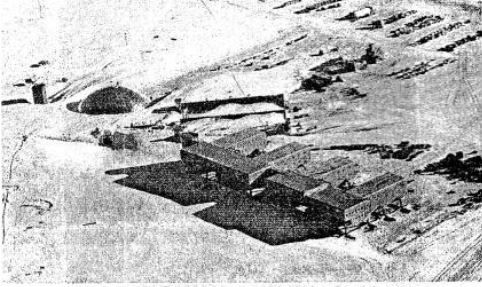
Picture Study: The Amundsen-Scott South Pole Station in Antarctica is seen in the photograph here.
Question 1. Who were Roald Amundsen and Capt. Robert Falcon Scott?
Answer: Roald Amundsen was a famous Norwegian polar explorer, and Captain Robert Falcon Scott was a prominent British naval officer. Both famously led competing expeditions in the race to be the first to reach the South Pole.
In simple words: They were famous explorers who led the very first expeditions to reach the South Pole.
Exam Tip: Be accurate: Amundsen was Norwegian and reached the pole first, while Scott was British.
Question 2. Why do countries have research stations in Antarctica ?
Answer: Nations build these bases to study the atmosphere of our planet, as well as to observe space through astronomy and space physics.
In simple words: Countries set up bases to learn about the Earth's air and study space.
Exam Tip: Key subjects studied include atmospheric science, weather, and astronomy.
Let's Do Something
Question 1. With the help of encyclopaedias and the Internet, find out more about the wildlife of Antarctica. Collect information and pictures of the albatross, blue whale, krill, squid, penguin, and seal. Stick the pictures in your scrapbook and write the information alongside.
Answer: Antarctica is a huge, frozen continent surrounded by the cold waters of the Southern Ocean. Because of the freezing climate, only a small number of animal species can survive here. Most of these creatures live near the coasts or along the warmer Antarctic Peninsula, while the icy interior of the continent has almost no life.
Here is a list of key Antarctic animals:
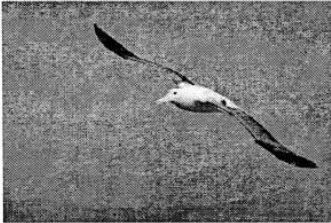
1. **Albatross:** These are massive seabirds with the largest wingspan of any bird, allowing them to spend most of their life flying over the ocean.
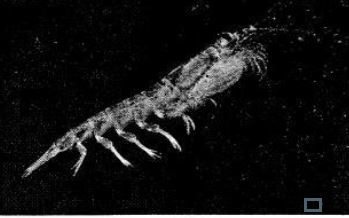
2. **Antarctic Krill:** These tiny, shrimp-like creatures are incredibly important because they form the base of the entire polar food chain.
3. **Antarctic Midge:** This is a small, wingless insect and the largest land animal that lives purely on the mainland.
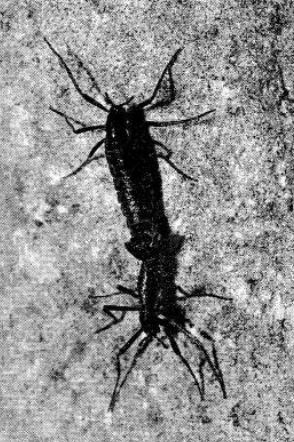
4. **Antarctic Springtail:** A tiny, insect-like creature that produces a natural antifreeze in its body to survive temperatures below freezing.
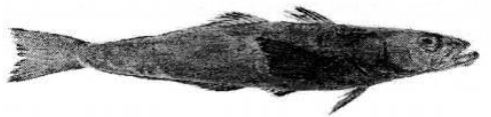
5. **Antarctic Toothfish:** These fish live in deep, icy waters and have special proteins in their blood to stop them from freezing.
6. **Arctic Tern:** This amazing bird travels all the way from the Arctic to the Antarctic and back each year, making the longest journey of any animal.
In simple words: Antarctica has very few land animals, but its oceans are full of life like krill, fish, seabirds, and whales.
Exam Tip: When describing Antarctic wildlife, highlight how these animals have unique physical features (like natural antifreeze) to survive the extreme cold.
Question 2. Read news magazines in your school library and search the Internet to gather information on the effects of climate change and global warming on Antarctica. Write a report on the basis of your research.
Answer: Report on Global Warming and Climate Change in Antarctica
Global warming is having a major impact on Antarctica. As temperatures rise around the world, the ice sheets and glaciers on the continent are beginning to melt faster. This melting ice flows into the sea, causing global sea levels to rise, which threatens coastal cities worldwide. Furthermore, warmer ocean waters are affecting the marine food chain, making it harder for krill, penguins, and seals to find food and survive. Protecting this frozen region is crucial for keeping our global climate stable.
In simple words: Global warming is melting Antarctica's ice, which causes sea levels to rise and harms polar animals.
Exam Tip: Focus on the twin impacts of rising global temperatures: melting ice sheets (causing sea level rise) and disrupted food chains for marine life.
Free study material for Geography
ICSE Voyage Solutions Class 7 Geography Chapter 18 Antarctica Location Physical Features Climate Natural Vegetation
Students can now access the detailed Voyage Solutions for Chapter 18 Antarctica Location Physical Features Climate Natural Vegetation on our portal. These solutions have been carefully prepared as per latest ICSE Class 7 syllabus. Each solution given above has been updated based on the current year pattern to ensure Class 7 students have the most updated Geography content.
Master Voyage Textbook Questions
Our subject experts have provided detailed explanations for all the questions found in the Voyage textbook for Class 7 Geography. We have focussed on making the concepts easy for you in Chapter 18 Antarctica Location Physical Features Climate Natural Vegetation so that students can understand the concepts behind every answer. For all numerical problems and theoretical concepts these solutions will help in strengthening your analytical skill required for the ICSE examinations.
Complete Geography Exam Preparation
By using these Voyage Class 7 solutions, you can enhance your learning and identify areas that need more attention. We recommend solving the Geography Questions from the textbook first and then use our teacher-verified answers. For a proper revision of Chapter 18 Antarctica Location Physical Features Climate Natural Vegetation, students should also also check our Revision Notes and Sample Papers available on studiestoday.com.
FAQs
You can download the verified Voyage solutions for Chapter 18 Antarctica Location Physical Features Climate Natural Vegetation on StudiesToday.com. Our teachers have prepared answers for Class 7 Geography as per 2026-27 ICSE academic session.
Yes, our solutions for Chapter 18 Antarctica Location Physical Features Climate Natural Vegetation are designed as per new 2026 ICSE standards. 40% competency-based questions required for Class 7, are included to help students understand application-based logic behind every Geography answer.
Yes, every exercise in Chapter 18 Antarctica Location Physical Features Climate Natural Vegetation from the Voyage textbook has been solved step-by-step. Class 7 students will learn Geography conceots before their ICSE exams.
Yes, follow structured format of these Voyage solutions for Chapter 18 Antarctica Location Physical Features Climate Natural Vegetation to get full 20% internal assessment marks and use Class 7 Geography projects and viva preparation as per ICSE 2026 guidelines.