

ICSE Solutions Voyage Class 7 Geography Chapter 4 Greenhouse Effect And Global Warming have been provided below and is also available in Pdf for free download. The Voyage ICSE solutions for Class 7 Geography have been prepared as per the latest syllabus and ICSE books and examination pattern suggested in Class 7. Questions given in ICSE Voyage book for Class 7 Geography are an important part of exams for Class 7 Geography and if answered properly can help you to get higher marks. Refer to more Chapter-wise answers for ICSE Class 7 Geography and also download more latest study material for all subjects. Chapter 4 Greenhouse Effect And Global Warming is an important topic in Class 7, please refer to answers provided below to help you score better in exams
Voyage Chapter 4 Greenhouse Effect And Global Warming Class 7 Geography ICSE Solutions
Class 7 Geography students should refer to the following ICSE questions with answers for Chapter 4 Greenhouse Effect And Global Warming in Class 7. These ICSE Solutions with answers for Class 7 Geography will come in exams and help you to score good marks
Chapter 4 Greenhouse Effect And Global Warming Voyage ICSE Solutions Class 7 Geography
Question. Collect rainfall data from the website of Indian Meteorological Department (IMD) for Mumbai, Chennai, Delhi and Kolkata and discuss how rainfall patterns have changed in the last 5 years.
Answer:
| Name of city | 2012 | 2013 | 2014 | 2015 | 2016 (in mm average) |
|---|---|---|---|---|---|
| Mumbai | 130 | 203.6 | 185.3 | 141.4 | 214.8 |
| Chennai | 77.7 | 151.6 | 136.3 | 107.2 | 86.4 |
| Delhi | 46.7 | 90 | 45.7 | 56.9 | 48.9 |
| Kolkata | 139.05 | 203.8 | 119.3 | 155.4 | 140.8 |
Mumbai had its highest amount of rain in 2016 and its lowest in 2012. Chennai got its maximum rainfall in 2013 and its minimum in 2012. Delhi experienced its heaviest showers in 2013 and its lowest in 2014. Kolkata received its peak rainfall in 2013 and its smallest amount in 2014.
In simple words: This table displays five years of rainfall measurements for four big Indian cities. By reading it, we can tell which year was the wettest and which was the driest for each city.
Exam Tip: When analyzing data tables, find the highest and lowest values first to easily write down the trends for each city.
Values and Life Skills
Question. We need to understand that global warming, climate change, acid rain and ozone depletion are all happening because of our dependence on fossil fuels and CFC-based technologies. Therefore, the need of the hour is to reduce our dependence on them. What can you do in this regard ?
Answer: We can reduce our reliance on these harmful materials and technologies through several actions:
1. Building homes and offices using green or reused materials such as bamboo, recycled metals, and organic paints.
2. Heating and lighting our living spaces with clean energy from the sun.
3. Running vehicles on less polluting options such as CNG and unleaded fuel.
4. Making better choices in our daily lives, such as:
(a) traveling by walking, cycling, taking public transit, or carpooling.
(b) purchasing home appliances that use less electricity.
(c) swapping regular light bulbs for energy-saving CFL bulbs.
In simple words: We can help keep the Earth safe by using solar power, driving less, and choosing energy-saving products. Small daily choices, like walking or using eco-friendly bulbs, make a big difference.
Exam Tip: To score full marks, try to divide your suggestions into practical everyday habits and larger, technology-based solutions.
Exercises
A. Fill in the blanks.
Question 1. ______ and ______ are examples of greenhouse gases.
Answer: Carbon dioxide, methane
In simple words: Gases like carbon dioxide and methane trap heat in the air. This keeps our planet warm.
Exam Tip: Carbon dioxide and methane are the most common examples, but water vapor and nitrous oxide are also correct options.
Question 2. ______ is a major cause of climate change.
Answer: Global Warming
In simple words: When the planet gets too hot, it causes weather and climate patterns to change.
Exam Tip: Remember that global warming refers to the rising temperature, which is the main driver behind broader climate changes.
Question 3. The ______ in earth’s temperature is called global warming.
Answer: increase
In simple words: Global warming means that the average temperature of our planet is going up.
Exam Tip: Make sure to use the word "increase" or "rise" to describe the temperature change clearly.
Question 4. The layer of atmosphere where ozone is found is called ______.
Answer: stratosphere
In simple words: The stratosphere is the second layer of air above us where the protective ozone shield is located.
Exam Tip: Double-check your spelling of "stratosphere" to ensure you do not lose easy points on fill-in-the-blank questions.
Question 5. The ozone layer protects us from the ______ of the sun.
Answer: ultraviolet rays
In simple words: This special layer of gas shields our bodies from the sun's harsh, burning rays.
Exam Tip: You can write "ultraviolet rays" or the abbreviation "UV rays" to answer this question.
B. Write True or False.
Question 1. Aeroplanes flying in the sky cause global warming.
Answer: True
In simple words: Airplanes burn fuel which releases greenhouse gases directly into the high atmosphere, trapping heat.
Exam Tip: Flying is a major source of carbon emissions, so this statement is correct.
Question 2. Forest fires do not cause global warming.
Answer: False. Forest fires actually contribute to global warming.
In simple words: When trees burn, they release massive amounts of carbon dioxide, which heats up our air.
Exam Tip: When a statement is false, always write down the correct fact to show the examiner you understand the topic.
Question 3. Ozone is found in the troposphere.
Answer: False. Ozone is located in the stratosphere.
In simple words: The ozone layer is high up in the stratosphere, not in the lower troposphere where we breathe.
Exam Tip: Keep the atmospheric layers clear: we live in the troposphere, but the protective ozone layer is in the stratosphere.
Question 4. The ozone layer is harmful for humans and animals.
Answer: False. The ozone layer is beneficial and protects living things.
In simple words: This gas layer keeps us safe by blocking dangerous radiation from reaching the ground.
Exam Tip: Remember that ozone high up in the sky is helpful, even though ground-level ozone can be unhealthy to breathe.
Question 5. CFCs and BFCs protect the ozone layer.
Answer: False. These chemical compounds break down and destroy the ozone layer.
In simple words: Chemicals from old cooling systems and sprays damage our protective sky shield.
Exam Tip: Identify CFCs and BFCs as ozone-depleting substances that cause holes in the protective layer.
C. Choose the correct option.
Question 1. Which of the following is a greenhouse gas?
(a) Oxygen
(b) Carbon dioxide
Answer: (b) Carbon dioxide
In simple words: Carbon dioxide is the main gas that traps heat and keeps our planet warm.
Exam Tip: Oxygen is essential for breathing and does not trap heat, whereas carbon dioxide is a well-known greenhouse gas.
Question 2. Which of the following causes global warming?
(a) Use of fossil fuels
(b) Hydroelectricity
Answer: (a) Use of fossil fuels
In simple words: Burning coal and oil releases heat-trapping gases, while water-based power is clean.
Exam Tip: Hydroelectricity is a clean renewable energy source, while burning fossil fuels is the leading cause of warming.
Question 3. What gas do cattle release?
(a) Methane
(b) CFCs
Answer: (a) Methane
In simple words: Farm animals like cows produce methane gas when they digest their food.
Exam Tip: Methane is a potent greenhouse gas linked directly to agricultural practices like raising cattle.
Question 4. Global warming will ______ climate change.
(a) reduce
(b) increase
Answer: (b) increase
In simple words: As the planet gets warmer, we will see more extreme and fast climate shifts.
Exam Tip: Warming acts as an accelerator, which means it will increase the speed and impact of climate change.
Question 5. The ozone layer is found between ______ above the earth’s surface.
(a) 20 and 40 km
(b) 40 and 60 km
Answer: (a) 20 and 40 km
In simple words: The protective ozone gas layer sits in the sky between 20 and 40 kilometers high.
Exam Tip: Memorize the altitude range of 20 to 40 km as the location of the ozone layer within the stratosphere.
D. Match the following
Question. Match the items in Column A with their correct matches in Column B:
| Column A | Column B |
|---|---|
| 1. Ozone depletion | (a) GHG |
| 2. Methane | (b) Disappearance of habitat |
| 3. Deforestation | (c) UV rays from the sun |
| 4. Fossil fuel | (d) CFCs |
| 5. Global warming | (e) comes from cattle |
Answer:
| Column A | Column B (Correct Match) |
|---|---|
| 1. Ozone depletion | (d) CFCs |
| 2. Methane | (e) comes from cattle |
| 3. Deforestation | (b) Disappearance of habitat |
| 4. Fossil fuel | (a) GHG |
| 5. Global warming | (c) UV rays from the sun |
In simple words: This matching list connects environmental issues with their causes and effects. For example, cutting down forests destroys wild animal homes.
Exam Tip: Draw straight lines or create a clean table to show matched pairs clearly in your exam paper.
E. Answer the following questions in brief
Question 1. Why do we call carbon dioxide a greenhouse gas?
Answer: We call carbon dioxide a greenhouse gas because it absorbs heat rays. This type of gas keeps thermal infrared radiation from leaving the earth's atmosphere.
In simple words: Carbon dioxide works like a glass ceiling. It lets light in but keeps heat from escaping, making the air warmer.
Exam Tip: Mention the term "infrared radiation" to explain exactly what type of heat energy is trapped by the gas.
Question 2. Name two more greenhouse gases.
Answer: Water vapour and methane are two other greenhouse gases found in our atmosphere.
In simple words: Beside carbon dioxide, gases like methane and water vapour also help trap warmth.
Exam Tip: Keep these two examples memorized as they are highly common in climate questions.
Question 3. How will countries like Bangladesh and Thailand be affected by global warming?
Answer: Climate change is melting polar ice sheets and breaking off giant icebergs in the polar regions. This adds a huge volume of water to our oceans. Consequently, rising sea levels will flood coastal areas in countries like Bangladesh, Thailand, and Malaysia.
In simple words: Melting polar ice will make the oceans rise. This will cause heavy floods in low coastal lands, like Bangladesh and Thailand.
Exam Tip: Connect the chain of events clearly: melting ice leads to rising oceans, which results in coastal flooding.
Question 4. What is responsible for causing a hole in the ozone layer?
Answer: The creation of holes in our ozone layer is caused by industries releasing large amounts of chemicals like chlorofluorocarbons (CFCs) and bromofluorocarbons (BFCs).
In simple words: Industrial chemicals like CFCs rise into the sky and break down our protective ozone gas.
Exam Tip: Remember to name both CFCs and BFCs as the main chemicals that damage the ozone layer.
Question 5. Name some diseases that are caused due to exposure to ultraviolet rays of the sun.
Answer: Exposure to harmful UV rays can lead to sunburn, eye cataracts, hair loss, skin cancer, and developmental defects at birth.
In simple words: Too much harsh sunlight can harm our eyes, skin, and health, causing diseases like skin cancer and cataracts.
Exam Tip: List at least three distinct health conditions (such as sunburn, cataracts, and skin cancer) to ensure a complete answer.
F. Answer the following questions in one or two paragraphs
Question 1. How is the greenhouse effect created?
Answer: The greenhouse effect begins when rays from the sun warm the earth's surface. The ground absorbs this heat and then radiates a portion of it back up towards space. However, certain gases in our atmosphere - like water vapour, carbon dioxide, and methane - catch some of this rising heat. These gases function like the glass walls of a garden greenhouse, allowing light to enter while preventing warmth from escaping. They reflect heat energy back down to our planet. As the level of these gases increases, more heat is trapped, making the earth progressively warmer.
In simple words: This effect is like a glass blanket around our world. It lets the sun's light in but keeps the heat from escaping, keeping our planet cozy.
Exam Tip: Explain the path of the sun's rays: they strike the ground, get absorbed, radiate back, and then get trapped by greenhouse gases.
Question 2. State three causes that have led to an increase in greenhouse gases in the atmosphere.
Answer: Several activities have increased the concentration of greenhouse gases:
1. The growth of industrial factories.
2. Rapid cutting down of forests, which reduces the trees that clean our air.
3. Rising air pollution from industrial chimney smoke.
4. Natural events like volcanic eruptions and earthquakes that release smoke and gas.
5. The expansion of cattle farming, which increases methane levels.
6. The physical growth of towns and cities.
In simple words: Human actions like cutting down forests, building factories, and farming cows release extra gases that heat the planet. Natural disasters also add to this.
Exam Tip: Select and explain three distinct causes clearly, making sure to show both human and natural factors if possible.
Question 3. What do you understand by the term ‘global warming’?
Answer: Global warming refers to the steady rise in the Earth's average temperature. This happens because greenhouse gases in our air trap a portion of the heat that radiates off the ground, keeping it inside our atmosphere.
In simple words: Global warming means our entire planet is slowly heating up because too much heat is trapped in the air.
Exam Tip: Keep your definition brief and focus on the relationship between trapped atmospheric heat and rising temperatures.
Question 4. State some anthropogenic (man-made) causes of global warming.
Answer: Human-driven causes of global warming include burning fossil fuels, clearing forest lands, and operating refrigerators and air conditioners. Other sources are aerosol sprays, factory smoke, raising large herds of cattle, and expanding urban cities.
In simple words: Things that people do, like cutting down trees, driving cars, using air conditioning, and growing big cities, make our world warmer.
Exam Tip: "Anthropogenic" is a scientific word for man-made. Make sure to list human habits like deforestation and fossil fuel combustion.
Question 5. Global warming does not augur well for our planet earth. State at least three reasons to support this statement.
Answer: Global warming is highly dangerous for our planet because:
(a) It causes severe climate changes that can ruin crops and lead to food shortages.
(b) It puts wildlife at risk as changing climates and deforestation destroy natural animal habitats.
(c) It melts polar ice sheets, which raises ocean levels and threatens coastal regions.
In simple words: Global warming is bad because it harms crops, ruins animal homes, and floods low-lying lands near the sea.
Exam Tip: Group your points clearly using labels like food supplies, wildlife habitats, and sea levels to structure your answer well.
G. Picture study.
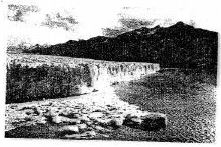
Question 1. Which region of the world is seen in the picture?
Answer: The image shows the freezing polar environments of the Arctic and Antarctic.
In simple words: This picture shows the coldest places on our planet, which are the North and South Poles.
Exam Tip: Identify the polar regions as the cold zones most affected by melting glaciers and ice sheets.
Question 2. How is it going to be affected by global warming?
Answer: Global warming will melt the ice caps in these regions, causing massive ice blocks to break off and slide into the sea. This extra water will raise sea levels worldwide. As a result, low coastal lands in places like Bangladesh, Thailand, and coastal US states like Florida will experience severe flooding.
In simple words: When the planet gets too warm, polar ice melts into the sea. This makes the oceans rise and floods cities close to the beach.
Exam Tip: Connect melting polar ice directly to global consequences like rising sea levels and flooding in low-lying nations.
Lets Do Something
Question 1. Imagine that you are an active member of the Greenpeace. Write a two-page appeal addressed to the Prime Minister of India stating why you think that increasing number of vehicles on roads will be disastrous to the nation in the long run.
Answer:
August 25, 2017
Mr. Narendra Modi,
Prime Minister of India
Dear Prime Minister Modi,
We are following your environmental efforts with great hope at this critical point in our planet's future. This year calls for strong commitments to address climate change. As the leader of a large democracy, the future of our citizens depends on your steps. We hope you will help guide other nations toward a fair global agreement to limit global warming.
We appreciate your goals for clean energy, and encourage focusing on local renewable power as a cheap way to help everyone. On the other hand, relying on coal harms public health, damages nature, and costs more money in the long run. We hope you will gather global support to reach these clean energy goals.
As a representative of Greenpeace, I want to point out that the number of vehicles on Indian roads has grown immensely over the last five years. This has become a major source of air pollution. Reports from the World Health Organization show that our air quality is in a worrying state.
More vehicles on the road cause constant traffic jams and release harmful emissions that damage our air. The WHO notes that India's level of fine dust (PM2.5) is around 68 micrograms per cubic meter, which is much higher than the safe limit of 10 micrograms.
According to health experts, these tiny dust particles enter deep into people's lungs, increasing the danger of lung cancer, breathing issues, and heart diseases.
Hospitals are seeing a rising number of patients with breathing problems. In our big cities, even state-run buses can be seen blowing out dark smoke, which harms pedestrians and street vendors. At a public march on World Environment Day, a senior green leader stated that human health is directly connected to our surroundings, and pollution can lead to long-term health issues like diabetes and heart trouble.
Working together with the government is the key to protecting our country's future. Greenpeace is eager to support your work to provide clean, cheap, and green energy for everyone.
Yours sincerely,
VeenuGopal,
Greenpeace Executive Director
In simple words: This letter asks the Prime Minister to help reduce air pollution from cars and buses. It explains that dirty air from vehicles makes people sick, and suggests using clean energy instead of fossil fuels.
Exam Tip: Use formal letter formatting with clear paragraphs and support your request with data (like PM2.5 levels) to draft a strong appeal.
Question 2. Make a collage using pictures or a chart to show the various causes and consequences of global warming.
Answer: To create your own global warming collage, you can organize pictures into two main sections:
1. **Causes**: Collect images of factory chimneys releasing smoke, heavy road traffic, clearing of forest trees, coal burning, and cattle farms.
2. **Consequences**: Gather pictures of melting glaciers, polar bears struggling on small ice sheets, coastal floods, dried crop fields, and bleached ocean corals.
Arrange these visuals on a chart sheet with bold labels to show how human activities lead to climate impacts.
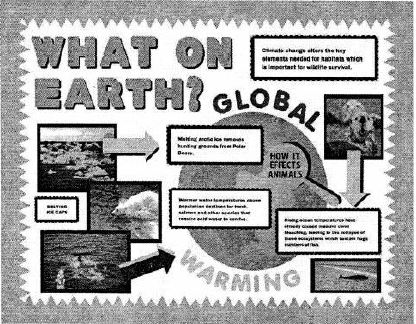
In simple words: You can make a poster using pictures from magazines or drawings. Put causes like cars and factories on one side, and effects like melting ice and floods on the other.
Exam Tip: Group your visual items logically under clear headings like "Causes" and "Effects" to make your poster easy to read.
Free study material for Geography
ICSE Voyage Solutions Class 7 Geography Chapter 4 Greenhouse Effect And Global Warming
Students can now access the detailed Voyage Solutions for Chapter 4 Greenhouse Effect And Global Warming on our portal. These solutions have been carefully prepared as per latest ICSE Class 7 syllabus. Each solution given above has been updated based on the current year pattern to ensure Class 7 students have the most updated Geography content.
Master Voyage Textbook Questions
Our subject experts have provided detailed explanations for all the questions found in the Voyage textbook for Class 7 Geography. We have focussed on making the concepts easy for you in Chapter 4 Greenhouse Effect And Global Warming so that students can understand the concepts behind every answer. For all numerical problems and theoretical concepts these solutions will help in strengthening your analytical skill required for the ICSE examinations.
Complete Geography Exam Preparation
By using these Voyage Class 7 solutions, you can enhance your learning and identify areas that need more attention. We recommend solving the Geography Questions from the textbook first and then use our teacher-verified answers. For a proper revision of Chapter 4 Greenhouse Effect And Global Warming, students should also also check our Revision Notes and Sample Papers available on studiestoday.com.
FAQs
You can download the verified Voyage solutions for Chapter 4 Greenhouse Effect And Global Warming on StudiesToday.com. Our teachers have prepared answers for Class 7 Geography as per 2026-27 ICSE academic session.
Yes, our solutions for Chapter 4 Greenhouse Effect And Global Warming are designed as per new 2026 ICSE standards. 40% competency-based questions required for Class 7, are included to help students understand application-based logic behind every Geography answer.
Yes, every exercise in Chapter 4 Greenhouse Effect And Global Warming from the Voyage textbook has been solved step-by-step. Class 7 students will learn Geography conceots before their ICSE exams.
Yes, follow structured format of these Voyage solutions for Chapter 4 Greenhouse Effect And Global Warming to get full 20% internal assessment marks and use Class 7 Geography projects and viva preparation as per ICSE 2026 guidelines.